Lot No. LOT-9697 · offered October 9, 2026
Crop EconomicsLot sheet
$6.20 Diesel Squeezes Farmers and Truckers Through Harvest
On-highway diesel averaged $6.20 a gallon on Oct. 5, up roughly 67% year-over-year, forcing farmers to add $20,000 in costs and truckers to charge $6.50 per loaded mile.
Market notes
- Average U.S. on-highway diesel reached $6.20 a gallon on Oct. 5, roughly 67% above year-ago levels, per EIA.
- Montana trucker Trent Stoltz estimates his annual truck operating costs are up about 30% and profits down 15% to 20%.
- President Trump on Monday signed an order suspending IRS penalties on on-road dyed diesel use through year-end and directed Treasury to defer the 24.4-cent federal excise tax.
- At least 12 states have waived dyed-diesel penalties, five have proposed diesel-tax relief, and seven have raised truck weight limits, per Agri-Pulse analysis.
- K-State economist Gregg Ibendahl said $6-$7 diesel could persist another year even if Hormuz shipping and Russian refining recover.
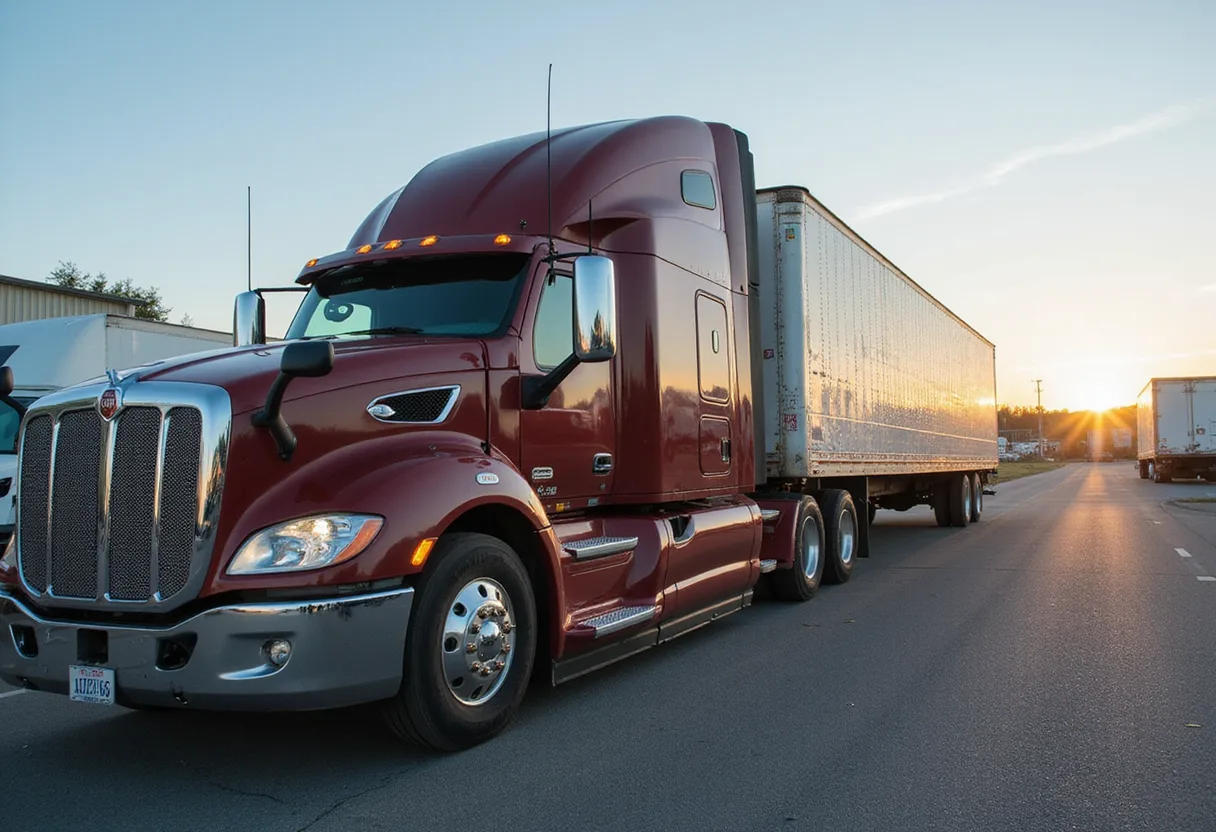
The average U.S. on-highway diesel price sat at $6.20 a gallon on Oct. 5 — nearly $2.50 higher than a year earlier and roughly 67% above year-ago levels, according to Energy Information Administration estimates. The national average has fallen 33 cents over the past two weeks, but farmers running combines and trucks through fall harvest are still paying prices that are reshaping operating budgets and shipping rates nationwide.
"It's getting tougher by the day," said Montana rancher and trucker Trent Stoltz, who hauls cattle, pulse crops and lumber. Higher diesel has sliced an estimated 15% to 20% off his trucking profits, and combined with oil, filter and repair costs he blames partly on tariffs, his annual truck operating bill will run about 30% above recent years. "Everything in this country moves with diesel, so this is all going to end up on the consumer in the end," Stoltz added.
What is driving diesel above $6?
Kansas State University economist Gregg Ibendahl points to three forces: reduced U.S. refining capacity since COVID-19, shipping disruptions through the Strait of Hormuz, and Ukrainian attacks on Russian refineries that have throttled Moscow's diesel exports. Demand is highly inelastic, he noted, so higher prices barely curb use.
Texas cattle hauler Mark Daniel framed the same point operationally. On-highway diesel in his region runs around $6.10 a gallon, he told Agri-Pulse; nontaxed on-farm diesel costs $5.50 to $5.60. Truckers he knows now charge $6.25 to $6.50 per loaded mile — "completely unheard of to move a commodity," Daniel said. "Everything in agriculture moves by diesel. It's our tractors, our trucks."
How much extra are farmers paying?
Wheat growers in Daniel's region face a brutal math problem. Their planting season is underway, and many burn through 400 gallons of diesel in roughly a day and a half. "You can imagine the costs that they're incurring is just horrendous," Daniel said.
Steve Kuiper, president of the Iowa Corn Growers Association, said fuel is "taking a pretty good bite" out of margins because many producers didn't lock in fuel contracts. One farmer he knows expects an extra $20,000 in costs this season. South Dakota grower Grant Rix has secured about half the diesel he'll need for harvest. His immediate worry: "Three weeks from now, am I going to get delivery of diesel when I need it?"
Will Trump's executive order move the needle?
President Donald Trump on Monday signed an order directing the IRS to stop penalizing on-road use of dyed diesel through year's end and asked Treasury Secretary Scott Bessent to defer the 24.4-cent federal excise tax on highway use of dyed diesel for the remainder of 2025. The relief applies only to dyed fuel; a clean suspension of the federal diesel tax would require Congress.
Kuiper welcomed the move as "really a plus for farmers." Stoltz called it "a pretty small offering" and suggested the administration should "figure out something better."
Patrick De Haan, head of petroleum analysis at Gasbuddy, cautioned on X that the order "sounds big" but "likely won't change much at the pump." Farmers already use dyed diesel for off-road equipment, and the executive order's fact sheet reportedly describes the federal tax as "deferred," not eliminated — meaning the liability could resurface later. Ibendahl agreed the order will help "a little bit, but not really a whole lot for farmers."
"The people who are going to benefit the most are going to be the independent truckers, because that's a big expense for them," Ibendahl said.
What are states doing?
At least 12 states have suspended dyed-diesel penalties, five have proposed diesel-tax relief, and seven have raised truck weight limits to spread fixed fuel costs across more freight, according to an Agri-Pulse analysis. State tax moves have ranged widely:
- Georgia suspended its 37.3-cent diesel tax through Oct. 29.
- Ohio cut its 47-cent tax to one-hundredth of a cent for 90 days.
- Nebraska lets agricultural haulers claim refunds on its 31.8-cent clear-diesel tax through Dec. 22.
- Illinois and Kentucky froze scheduled increases.
State diesel taxes and fees range from about 9 cents per gallon in Alaska to nearly 93 cents in California, with a national average of 35.50 cents, EIA data show.
Louisiana farmer and USA Rice chair John Owen called Gov. Jeff Landry's dyed-diesel order "helpful" but said "it's not a huge shot in the arm," since most farm diesel is already dyed. Daniel, noting his governor's order may not protect interstate haulers, said producers are "wondering, when the declaration ends, are they going to give a grace period at the end? That's kind of a gray area."
Weight-limit changes include Nebraska allowing harvest loads up to 25% over normal limits, South Dakota and Minnesota at 10%, Iowa and Missouri at 90,000 pounds for some ag loads, and Texas and Georgia at 95,000 pounds.
How long will $6-plus diesel last?
Even in a best-case scenario where Hormuz traffic resumes and Russia repairs its refineries, Ibendahl told Agri-Pulse he expects about a year before prices normalize. "I think we're kind of in a new normal as far as pricing is concerned," he said — a baseline that will pressure farm margins and freight rates well into the next planting season.
via Agri-Pulse (Source)
More from Marcus Bennett
Show full bio
Senior reporter covering regulation, policy and their impact on Agribusiness coverage for industry professionals at Agribusiness Wire.
409 articles
Also in the yard
- Diesel backs off record $6.52 but stays near highs for fall fieldwork
- Diesel, Gasoline Slip but Stay at October Records as Trump Rejects Export Ban
- Diesel Costs to Stay Elevated, K-State Economist Warns
- Record Diesel Prices Threaten Ohio Farmers' 2026 Budgets
- USDA Economist Warns Diesel Prices Squeeze Farm Breakevens