Lot No. LOT-1306 · offered October 13, 2026
Commodity MarketsLot sheet
Ethanol Could Claim 5 Billion Gallons of Maritime Fuel Market
A Maersk Mc-Kinney Møller Center report finds ethanol matches methanol in combustion and emissions. U.S. producers could see 5 billion gallons in new marine demand, the Renewable Fuels Association says.
Market notes
- Maersk Mc-Kinney Møller Center for Zero Carbon Shipping released the report on Thursday
- More than 110 methanol-capable ships are in operation, with about 300 more on order, per the Renewable Fuels Association
- RFA estimates that 5 percent of the maritime fuel market would create 5 billion gallons of ethanol demand and 1.5 billion extra bushels of corn
- Ethanol reduces greenhouse gas emissions by at least 50 percent compared to petroleum, per the report and RFA
- Lab of the Rockies estimated up to 2 billion gallons in near-term annual demand under high-substitution scenarios, based on 112 methanol dual-fuel ships
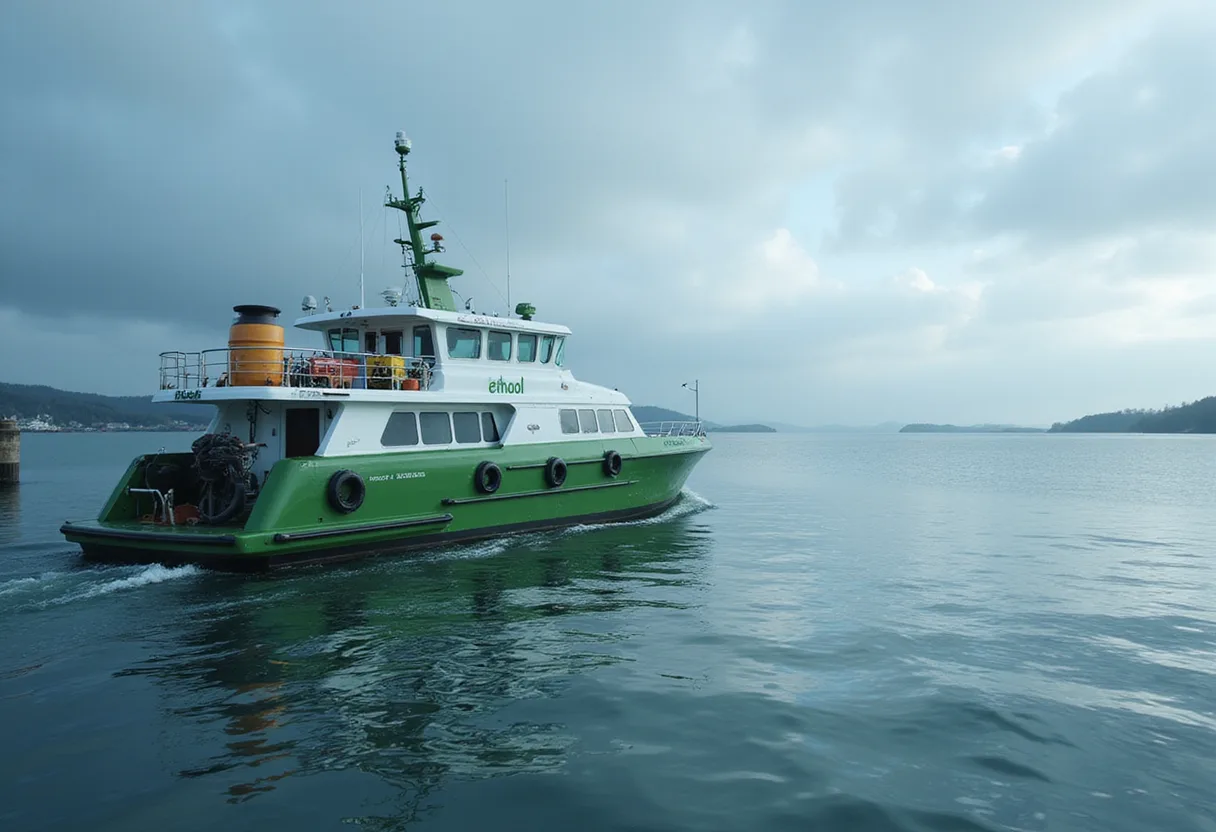
U.S. ethanol producers could see 5 billion gallons of new annual demand by capturing 5 percent of the global maritime fuel market, Renewable Fuels Association CEO Geoff Cooper said Thursday. The figure accompanies a new technical report from the Maersk Mc-Kinney Møller Center for Zero Carbon Shipping.
The study finds ethanol matches methanol in combustion behavior and emissions profile. Ethanol also carries higher energy density, reducing onboard storage needs at sea.
Behind that figure sits a more immediate opportunity. More than 110 methanol-capable ships already operate worldwide. Another 300 sit on order, according to the Renewable Fuels Association. The U.S. trade group estimates that switching the global fleet of methanol-capable ships to renewable ethanol would create new annual demand for more than 1 billion gallons.
What does the report conclude?
The Maersk center released the study on Thursday. It focused on ethanol's viability as a low-carbon marine fuel. Researchers concluded ethanol matches methanol in combustion behavior, emissions profile, and material compatibility. Ethanol also carries higher energy density, reducing onboard storage needs.
The center also noted that widespread renewable-methanol production remains years away, which gives ethanol a clear window to claim early market share in dual-fuel ships worldwide. The report's authors offered no commercial forecast of their own. They wrote that technical performance alone does not settle the question. Sustainability and affordability will be addressed in separate studies, the center said.
What does the Renewable Fuels Association add?
Geoff Cooper runs the U.S. ethanol trade group. He framed the technical findings in commercial terms Thursday. "Ethanol is a global commodity that is broadly available at a low cost, it reduces GHG emissions by at least 50% compared to petroleum, and it offers numerous other attractive fuel and combustion properties," Cooper said. He called ethanol "a promising drop-in option" for ships built to burn methanol.
Cooper's organization has put numbers on the upside. Five percent of maritime fuel demand would translate into 5 billion gallons of ethanol. That same market share would draw at least 1.5 billion extra bushels of corn from farmers, the group said. Cooper added one more line: "Ethanol can seamlessly transition into the growing fleet of methanol-fueled vessels with only minimal adjustments needed."
Are there limits to ethanol at sea?
Biodiesel remains the only broadly available low-carbon fuel for conventional diesel engines. Global supply is already stretched between road transport and aviation, the report noted. Ethanol-diesel blends could offer another path. Blend stability remains a technical hurdle.
The Maersk center flagged one practical advantage of ethanol over methanol. Existing high-volume production means no waiting for new fuel supply chains. Biodiesel and renewable diesel producers will likely watch the marine pivot closely, since both fuels are now competing for similar biomass feedstocks. A separate analysis from the Lab of the Rockies reached a similar conclusion. That study estimated near-term demand potential at 2 billion gallons annually from 112 methanol dual-fuel vessels.
What does this change for growers and cooperatives?
The report reframes ethanol as a transport fuel with two distinct markets. Domestic gasoline blending absorbs a large share of U.S. production. The marine sector now appears capable of adding billions more gallons. Neither market requires new engine technology in cars or ships. Both demand additional bushels at the elevator.
Additional marine demand would require expanded corn purchases and adjusted grinding schedules at the plant level. Sustainability, lifecycle emissions, and affordability questions all remain open, and the Maersk center will address them in subsequent reports in its low-carbon marine fuel research series.
Whether the economics work will depend on the next reports in the Maersk center's series. Technical promise does not yet equal commercial contracts.
via zerocarbonshipping.com (Original)
More from Marcus Bennett
Show full bio
Senior reporter covering regulation, policy and their impact on Agribusiness coverage for industry professionals at Agribusiness Wire.
410 articles
Also in the yard
- NLR report sizes ethanol marine market at 2 billion gallons
- POET and Maersk Complete First 100% Bioethanol Marine Bunkering in U.S.
- U.S. Ethanol Exports Climb to Five-Month High as Mandate Talk Grows
- US Senate Advances Farm Bill 2.0, Year-Round E15 in Focus
- California Clears E-15, Opening Second-Largest US Fuel Market