Lot No. LOT-4708 · offered October 16, 2026
Farm MachineryLot sheet
Farm Machinery Emissions Threaten China's Net-Zero Path, Analysis Finds
A Carbon Brief analysis finds greenhouse gas emissions from China's tractors, harvesters and other farm equipment are rising fast enough to hinder the country's net-zero targets.
Market notes
- Carbon Brief analysis: rising farm equipment emissions could hinder China's net-zero goals
- China targets emissions peak before 2030 and net zero by 2060
- Agricultural machinery emissions are rising, not stabilizing, per the analysis
- Potential emissions rules would affect tractor and combine manufacturers and farm input costs
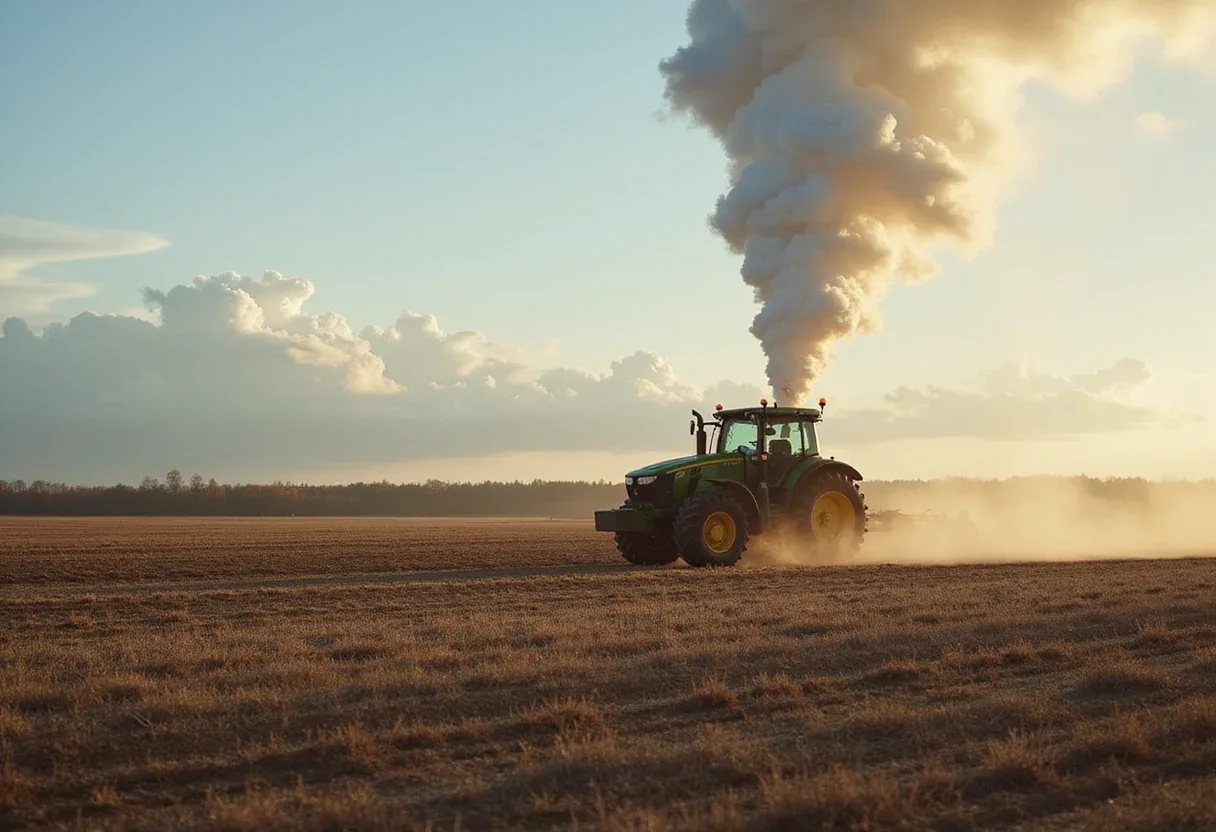
Greenhouse gas emissions from China's agricultural machinery are rising and could "hinder" the country's net-zero goals, according to an analysis published by Carbon Brief.
The finding lands on one of the world's largest farming systems. China operates the biggest tractor and combine fleet in Asia, and its mechanization drive has accelerated for two decades. As diesel-powered equipment spreads across provinces such as Henan, Shandong and Heilongjiang, exhaust from tractors, harvesters and irrigation pumps grows with it.
For growers and equipment makers, the stakes are measurable. Diesel remains a dominant input cost on mechanized Chinese farms, and every litre burned carries a carbon ledger. If Beijing tightens emissions rules on agricultural machinery, manufacturers serving the Chinese market would face redesign costs, and farmers would face replacement or retrofit expenses.
Why does farm equipment matter for net zero?
China has pledged to peak its carbon emissions before 2030 and reach net zero by 2060. Agriculture sits inside that pledge. While much policy attention has gone to power plants, steel and transport, the machinery working China's roughly 120 million hectares of cropland has drawn less scrutiny.
The Carbon Brief analysis signals that this gap now matters. Emissions from farm equipment are not flat. They are climbing, and the analysis concludes that trajectory could hinder the national timeline unless policy catches up.
That echoes a pattern seen in other mechanizing economies. India's farm diesel subsidy bill and the European Union's push to electrify machinery under its Green Deal show the same tension. Food production demands power, and the power source determines the carbon outcome.
What could change for manufacturers and growers?
For Chinese machinery makers, including major state-linked producers, the question is whether regulators will impose emissions standards like those the United States and Europe placed on off-road diesel engines. Those rules forced engine redesigns and raised machine prices in Western markets.
For farmers, the practical question is cost. Cleaner machines, electric tractors or biofuel blends each carry a price premium. Chinese agricultural policy has historically cushioned farmers through equipment purchase subsidies, so any emissions mandate would likely arrive paired with support programs.
analysts, the report frames agricultural machinery as a sector where climate targets and food security goals intersect directly. Balancing the two will shape equipment markets for decades.
The analysis suggests the next decade is decisive: whether China's farm machinery fleet turns over to cleaner technology before 2030 will help determine if the sector becomes a hindrance to net zero or a model for decarbonizing agriculture at scale.
via Google News: Farm equipment (Source)
More from Marcus Bennett
Show full bio
Senior reporter covering regulation, policy and their impact on Agribusiness coverage for industry professionals at Agribusiness Wire.
408 articles
Also in the yard
- Farm Machinery on Track for 20% of China's Emissions by 2050
- Nature examines pollution mitigation for China's farm machinery fleet
- China Hits Milestone in Advanced Agricultural Machinery
- Study: Shifting U.S.-China Trade From Feed to Food Could Cut Footprint
- China's $17 Billion Ag Pledge: Corn Is the Tell, Economist Says