Lot No. LOT-5427 · offered October 9, 2026
Agricultural PolicyLot sheet
Hog producers take Prop 12 fight to Washington as farm bill stalls
Hog producers head to Washington to lobby Congress over California's Proposition 12 as the 2024 farm bill reauthorization remains stalled over federal preemption language.
Market notes
- Proposition 12 took full effect on January 1, 2024 after passing in California in 2018 and surviving a 5-4 Supreme Court ruling in May 2023
- The U.S. House passed its 2024 farm bill draft in May 2024 with language to preempt state production standards; the Senate has not embraced the provision
- Prop 12 requires breeding sows to have at least 24 square feet of usable floor space and the ability to turn around freely
- Industry groups cite per-sow retrofit costs in the thousands of dollars, with farm-level spending varying by operation size and existing barn design
- California pork sales account for roughly 12% of U.S. consumption, the supply base the preemption fight is anchored on
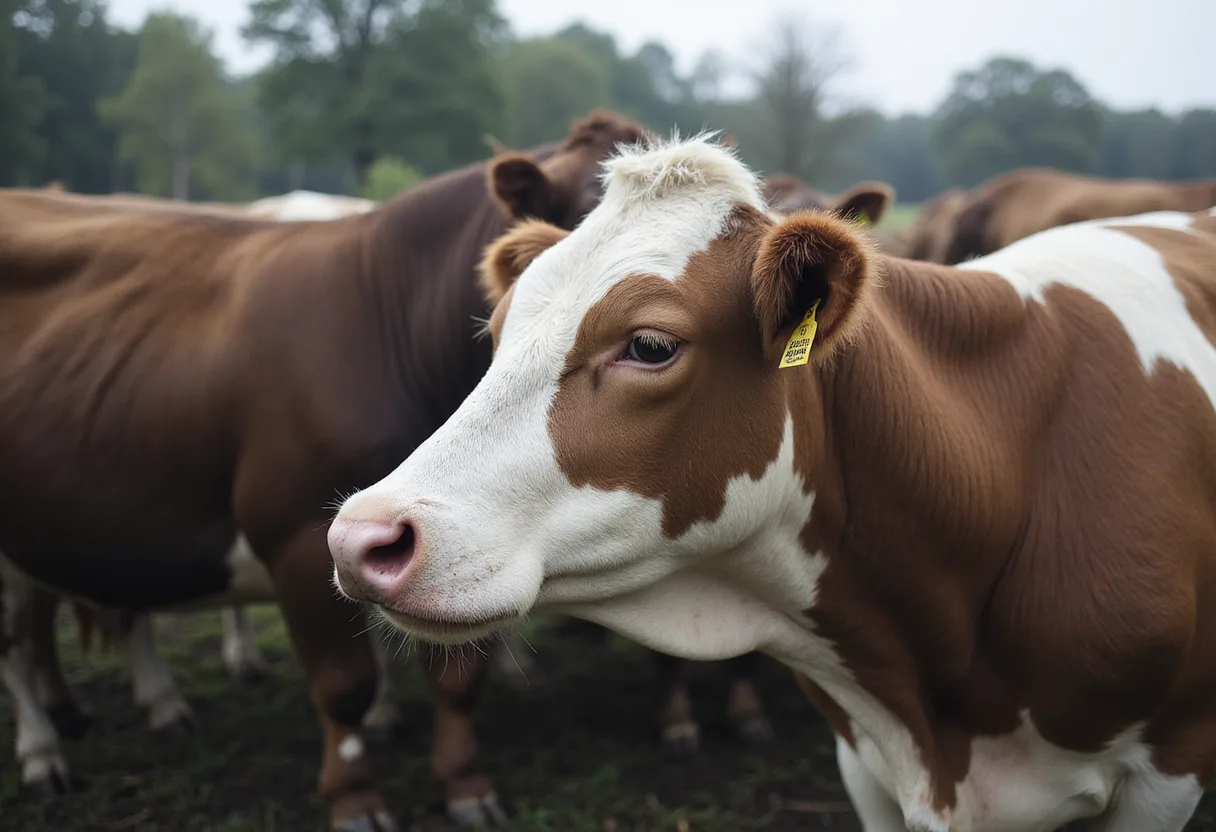
Hog producers from multiple states will travel to Washington this week to lobby Congress over California's Proposition 12, escalating a fight that has stalled the 2024 farm bill for more than 18 months.
The visit, reported by The Fence Post, places pork-industry representatives at the center of a federal preemption debate that has divided agriculture groups, animal-welfare organizations and state attorneys general since the law took full effect on January 1, 2024.
What Prop 12 actually requires
Proposition 12, approved by California voters in 2018, sets minimum space standards for breeding pigs, veal calves and egg-laying hens sold in the state.
Breeding sows must have at least 24 square feet of usable floor space and must be able to turn around freely.
Egg-laying hens must be cage-free. Veal calves must be housed in groups rather than individual crates.
The standards apply to any pork, eggs or veal sold in California, regardless of where the animal was raised.
That extraterritorial reach triggered a constitutional challenge from the National Pork Producers Council and Iowa producers, who argued the law disrupted interstate commerce.
The U.S. Supreme Court rejected that challenge in May 2023 by a 5-4 vote, ruling that the dormant commerce clause did not preempt a state demand that out-of-state producers meet its standards if they wanted access to its market.
Why the fight is tied to the farm bill
The pork industry's preemption request is now a farm bill item. The House Agriculture Committee included language that would prohibit states from setting production standards for agricultural goods sold in interstate commerce. The Senate has been slower to embrace the provision.
The House passed its farm bill draft in May 2024. Since then, the bill has stalled over disputes ranging from crop insurance subsidies to nutrition spending and conservation program funding.
Animal-welfare preemption is one of the unresolved items in any eventual conference report.
Producers traveling to Washington this week want that language retained. They argue that a patchwork of state standards drives up compliance costs, segregates supply chains and complicates gilt and boar procurement.
The Humane Society of the United States and a coalition of state-level welfare groups want the language stripped, arguing that federal preemption would override voter-approved protections in California, Massachusetts, Michigan and other states.
What Prop 12 has cost hog operations
For sow operations, Prop 12 has meant two parallel housing systems. Some producers retrofitted barns at significant expense; others redirected gilt sales into segregated Prop 12-compliant supply chains.
The American Farm Bureau Federation and the National Pork Producers Council have cited retrofit costs in the thousands of dollars per sow, though farm-level spending varies by operation size, existing barn design and prior compliance investments.
Packers — including Smithfield Foods, Tyson Foods, JBS USA and Hormel Foods — spent much of 2023 auditing sow suppliers, contracting with Prop 12-compliant operations and adjusting plant logistics to handle segregated pork flows.
The cost of those adjustments has filtered into wholesale and retail pricing, with Prop 12-compliant pork often trading at a premium in California retail channels.
What the lobbying push targets
The producers heading to Washington represent a mix of independent hog farmers, cooperative members and state association leaders, according to The Fence Post's reporting.
They will press both chambers to keep federal preemption language in the final farm bill conference report.
The Senate Agriculture Committee remains the harder chamber. Several senators have signaled skepticism about overriding state ballot measures, and Democrats representing states with strong confinement-rule histories have opposed the language.
The committee's willingness to include preemption will determine whether Prop 12 stays a state-level rule or yields to a federal standard.
What is the next decision point?
The farm bill's path forward hinges on a handful of unresolved titles — nutrition spending, crop insurance reference prices, conservation reserve acres and animal-welfare preemption.
Producers arriving in Washington this week will try to keep their issue at the top of that list.
Whether the Senate follows the House's lead on preemption will determine whether Prop 12 remains a live compliance question for the pork sector or fades as a federal override settles the rule.
via Google News: Farm bill and ag policy (Source)
More from Grace Kim
Show full bio
Correspondent covering people, launches and day-to-day practice in Agribusiness coverage for industry professionals at Agribusiness Wire.
453 articles
Also in the yard
- Prop 12, Packers Act Riders Await Farm Bill Floor Action
- Pork Producers Press Congress for Prop. 12 Fix in Farm Bill
- Senate Farm Bill 2.0 Clears Committee With Prop 12 Unresolved
- Pork producers press lawmakers for Proposition 12 fix as Farm Bill talks advance
- Pork Producers Keep Pressure On For Proposition 12 Fix