Lot No. LOT-5304 · offered October 9, 2026
Agricultural PolicyLot sheet
House Passes 2026 Farm Bill, Keeps Federal Ban on Intoxicating Hemp
The U.S. House cleared the 2026 Farm Bill and sent the five-year package to the Senate with the federal ban on intoxicating hemp-derived products intact, Cannabis Business Times reported.
Market notes
- The U.S. House of Representatives passed the 2026 Farm Bill
- The bill retains the federal prohibition on intoxicating hemp-derived products
- The 2018 Farm Bill set the 0.3% total THC threshold that defines legal hemp
- Delta-8 and delta-10 THC fall outside the legal hemp definition
- The legislation now heads to the Senate Agriculture Committee for further consideration
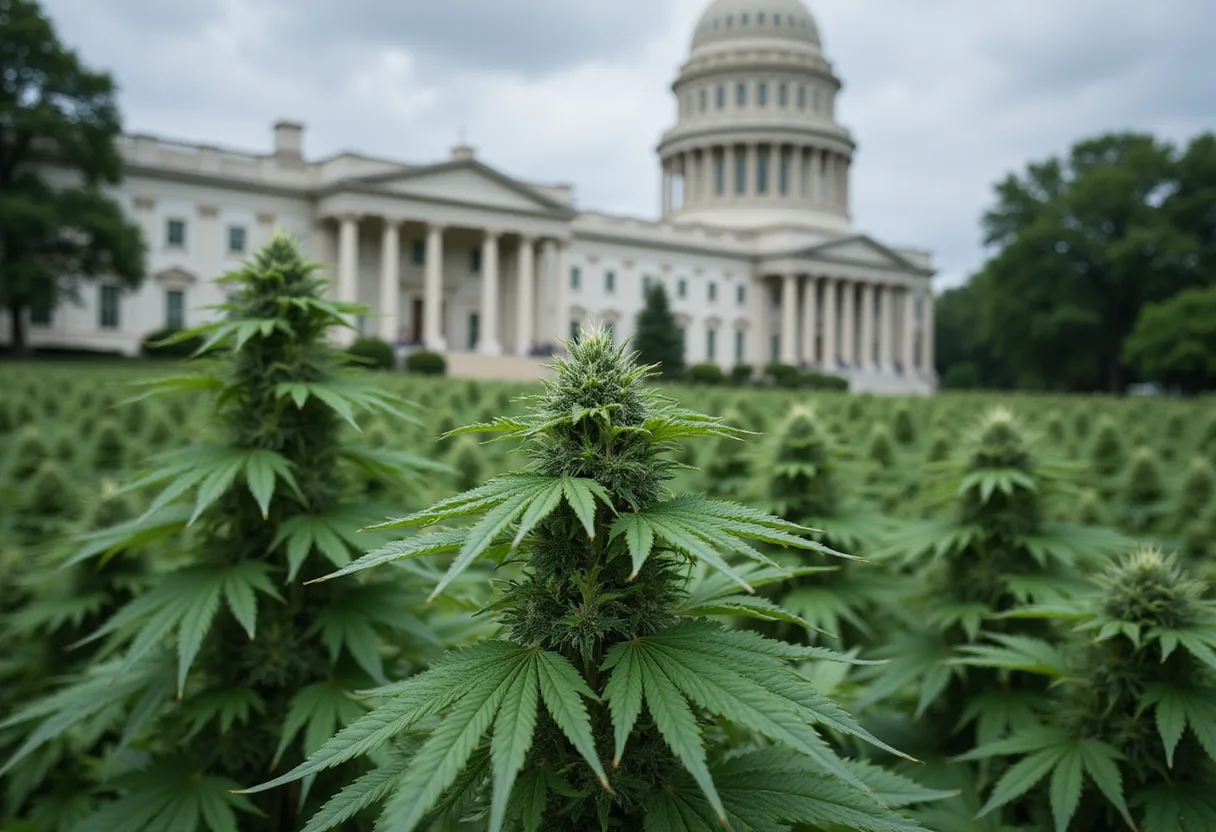
The U.S. House of Representatives passed the 2026 Farm Bill, retaining the federal ban on intoxicating hemp-derived products that lawmakers built into the framework, Cannabis Business Times reported.
The five-year reauthorization of federal farm programs — covering commodity support, crop insurance, conservation and nutrition assistance — now moves to the Senate, where Agriculture Committee members will weigh amendments before any conference negotiations with the House.
What does the retained hemp language do?
The provision keeps delta-8 THC, delta-10 THC and other intoxicating hemp-derived cannabinoids outside the legal definition of hemp. The 2018 Farm Bill defined hemp as cannabis containing no more than 0.3% total THC on a dry-weight basis and removed the crop from the Controlled Substances Act for plants meeting that standard. Products exceeding the threshold remain federally controlled substances.
For producers and processors, the practical effect is continued prohibition on consumer goods containing intoxicating hemp extracts — a market segment that expanded rapidly after 2018 and that state cannabis regulators and traditional cannabis operators have urged Congress to restrict.
How is the hemp industry split?
Hemp acreage divides between two distinct markets. Fiber and grain growers — supplying textiles, hempseed food products, animal bedding and bioplastics — operate well within the 0.3% standard and have not been the target of restriction.
The contested category is the cannabinoid extract market, where processors manufactured consumer products using isomerized CBD after the 2018 framework created a regulatory opening.
- Cannabinoid producers argue the products should be regulated under state cannabis frameworks, with seed-to-sale tracking, potency caps and excise taxation.
- State cannabis regulators in legal-cannabis states have pressed Congress for the federal prohibition, citing enforcement gaps, packaging inconsistencies and youth access concerns.
- Fiber and grain trade groups have largely stayed out of the cannabinoid fight or sided with restrictions.
What might the Senate change?
Senate Agriculture Committee leadership has signaled willingness to revisit hemp provisions during markup. Conference negotiations between the chambers typically span several months and address differences across the bill's titles — from Agriculture Risk Coverage and Price Loss Coverage reference prices to crop insurance premium subsidies and conservation reserve enrollment.
The Senate has historically taken a different posture on hemp cannabinoids than the House, and amendments are expected at committee markup.
Why are row-crop and livestock operators watching?
For corn, soybean, wheat and cotton producers, the commodity title sets reference prices used to calculate payments under ARC and PLC — both of which factor directly into cost-of-production calculations for the 2026 and subsequent crop years.
Conservation program reauthorization affects working-lands enrollment and easement decisions on every operation. Crop insurance premium subsidy levels determine coverage economics on every planted acre.
Hemp producers face narrower exposure. Fiber and grain contracts operate under the existing 0.3% standard and continue to qualify for federal crop insurance where policies are available. Intoxicating-hemp processors face an unchanged regulatory ceiling regardless of conference outcomes.
What happens next?
The Senate's hemp language — and whether conferees ultimately accept, modify or strike the House prohibition — will determine whether intoxicating hemp processors retain any legal federal pathway through the 2026 cycle or whether the ban holds for the full five-year reauthorization window.
via Google News: Seed industry (Source)
More from Marcus Bennett
Show full bio
Senior reporter covering regulation, policy and their impact on Agribusiness coverage for industry professionals at Agribusiness Wire.
412 articles
Also in the yard
- House Members File Trump-Backed Bill to Ease Hemp THC Product Ban
- Fairfield Hemp Seed Company Warns Federal Bill Could Force Closure
- Hemp industry pushes bridge regulation as Dec. 11 ban deadline nears
- Senate Agriculture Chairman Boozman Releases Farm Bill 2.0 Text
- Farm Bill Reauthorization Drifts Past Midterms as Senate Opens Talks