Lot No. LOT-4144 · offered October 9, 2026
Crop EconomicsLot sheet
Minnesota Harvest Trails Five-Year Average by Wide Margin
Minnesota farmers have harvested 12% of the state's corn and 25% of soybeans as of Sunday, USDA reports, trailing five-year averages of 16% and 51% respectively. Cool, wet conditions continue to stall combines across the state.
Market notes
- Minnesota corn harvest at 12% as of Sunday, vs. 16% five-year average — a 4-point gap
- Minnesota soybean harvest at 25%, vs. 51% five-year average — a 26-point gap
- Cool temperatures and saturated fields are the primary drivers of the slowdown
- Sugarbeet harvest data was referenced in the Brownfield reporting but no specific percentage was available
- USDA's next weekly crop progress update will show whether the soybean deficit widens
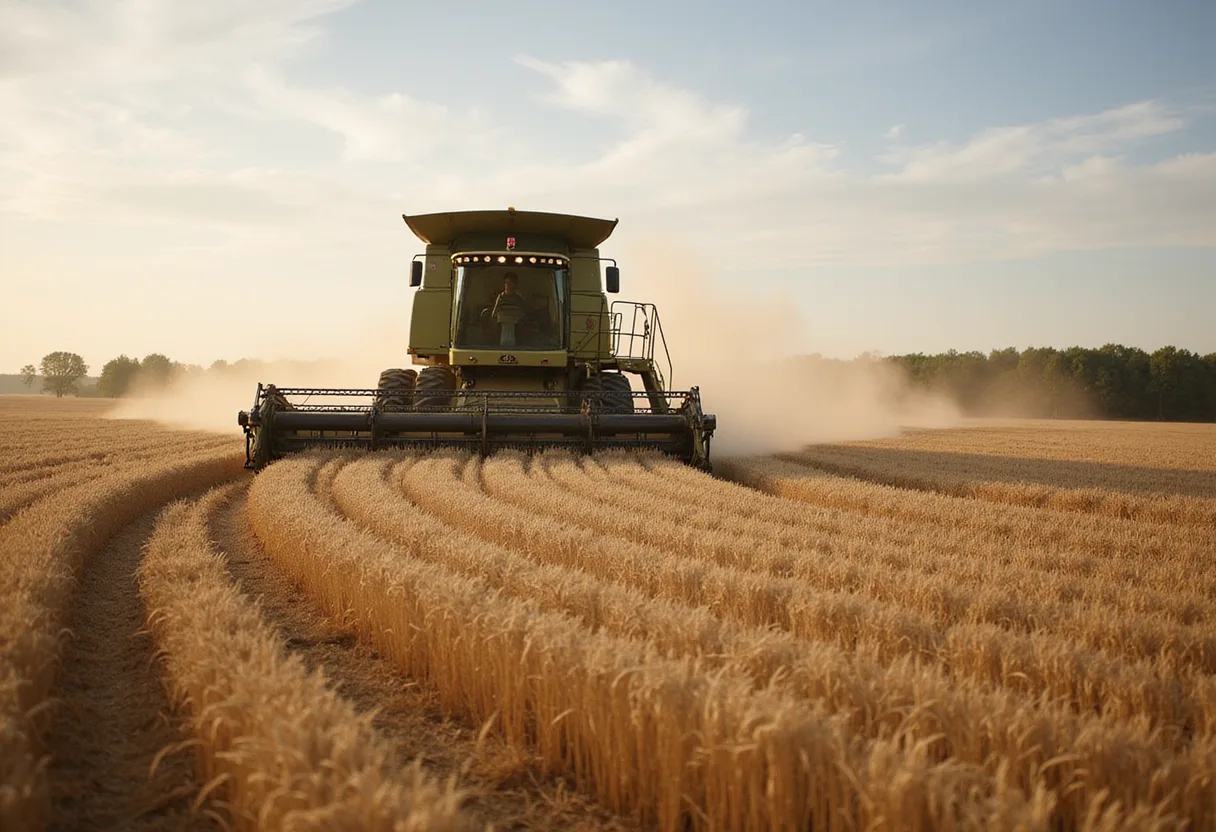
Minnesota farmers have harvested 12% of the state's corn crop as of Sunday, falling 4 percentage points behind the five-year average of 16%, according to USDA's most recent crop progress report. Soybean progress shows a wider gap, with 25% of the crop cut against a five-year average of 51%.
Cool temperatures and saturated fields are the primary drivers of the slowdown, Brownfield Ag News reported. The network noted that growers need several days of dry weather before combines can return to fields at full pace.
How far behind is the soybean pace?
The 26-percentage-point gap between the current soybean harvest (25%) and the five-year average (51%) is the most striking figure in the report.
At this point in a typical year, Minnesota's soybean harvest would be roughly complete. Instead, more than three-quarters of the crop remains in the field, raising the risk of quality losses and lodging if wet conditions persist into late October.
Traders will watch whether basis at interior Minnesota elevators weakens as delayed deliveries stack up against existing storage commitments.
How does the corn pace compare?
Corn progress sits 4 percentage points behind the five-year average, a narrower gap but still meaningful for a crop vulnerable to late-season moisture. Watch points:
- 12% of state corn harvested vs. 16% five-year average
- Cool conditions slowing grain drydown in the field
- Delayed corn harvest can push soybean harvest later as farmers prioritize one crop over the other
The 4-point corn shortfall matters because corn left in the field longer faces stalk rot, ear drop, and wildlife feeding, any of which can trim the bushels a combine eventually takes off. Producers with on-farm drying capacity may also face higher propane and natural gas bills as late-harvested corn enters the bin above ideal moisture.
What about sugarbeets?
Brownfield's reporting referenced USDA sugarbeet harvest data, but the published update carried no specific percentages for the crop. Sugarbeet lifting in the Red River Valley typically accelerates in October, and wet field conditions have been a recurring concern for processors and grower-owned cooperatives operating in the region.
What margins are at stake?
Each week of harvest delay pressures the farm budget in several ways:
- Cash basis weakens as elevators run out of storage space
- Drying expense rises as late-harvested corn enters the bin above ideal moisture
- Fall fertilizer and anhydrous applications slip past optimal soil-temperature windows
- Two crops can become ready at once, forcing rushed decisions about which fields to take first
What's the near-term outlook?
Both the USDA data and Brownfield's reporting point to the same constraint: fields need to dry out before Minnesota's combines can return to a normal pace.
A forecast favoring dry days would let harvest resume and begin closing the gap with the five-year average.
Another round of rain would deepen the shortfall and force more difficult calls about crop sequencing and drying expense.
USDA's next weekly crop progress update will provide the first read on whether Minnesota can recover the lost ground or whether the 26-point soybean deficit widens further.
via Brownfield Ag News (Source)
More from Marcus Bennett
Show full bio
Senior reporter covering regulation, policy and their impact on Agribusiness coverage for industry professionals at Agribusiness Wire.
410 articles
Also in the yard
- Minnesota Soybean Harvest at 14%, Trails Five-Year Average of 23%
- Iowa Corn Harvest at 7%, Trails Five-Year Average of 20%
- Wisconsin Corn Harvest Matches Average, Soybeans Trail by Five Points
- USDA: Corn Harvest Hits 18%, Matching Five-Year Average Pace
- US soybean harvest trails 33% norm at 25%; wheat gains, Black Sea watched