Lot No. LOT-1565 · offered October 12, 2026
Precision Agriculture & AgTechLot sheet
Multispectral Camera Market Outlook Runs To 2035 On Precision Ag Demand
IndexBox projects the multispectral camera market through 2035, citing precision agriculture as the core demand driver; the accessible summary offers no valuation or growth rate.
Market notes
- IndexBox published a multispectral camera market forecast with a 2035 endpoint.
- Precision agriculture is identified as the primary demand driver for multispectral camera adoption.
- The accessible report summary contains no dollar valuation, growth rate or regional breakdown.
- Multispectral imaging supports variable-rate input decisions tied to farm margins.
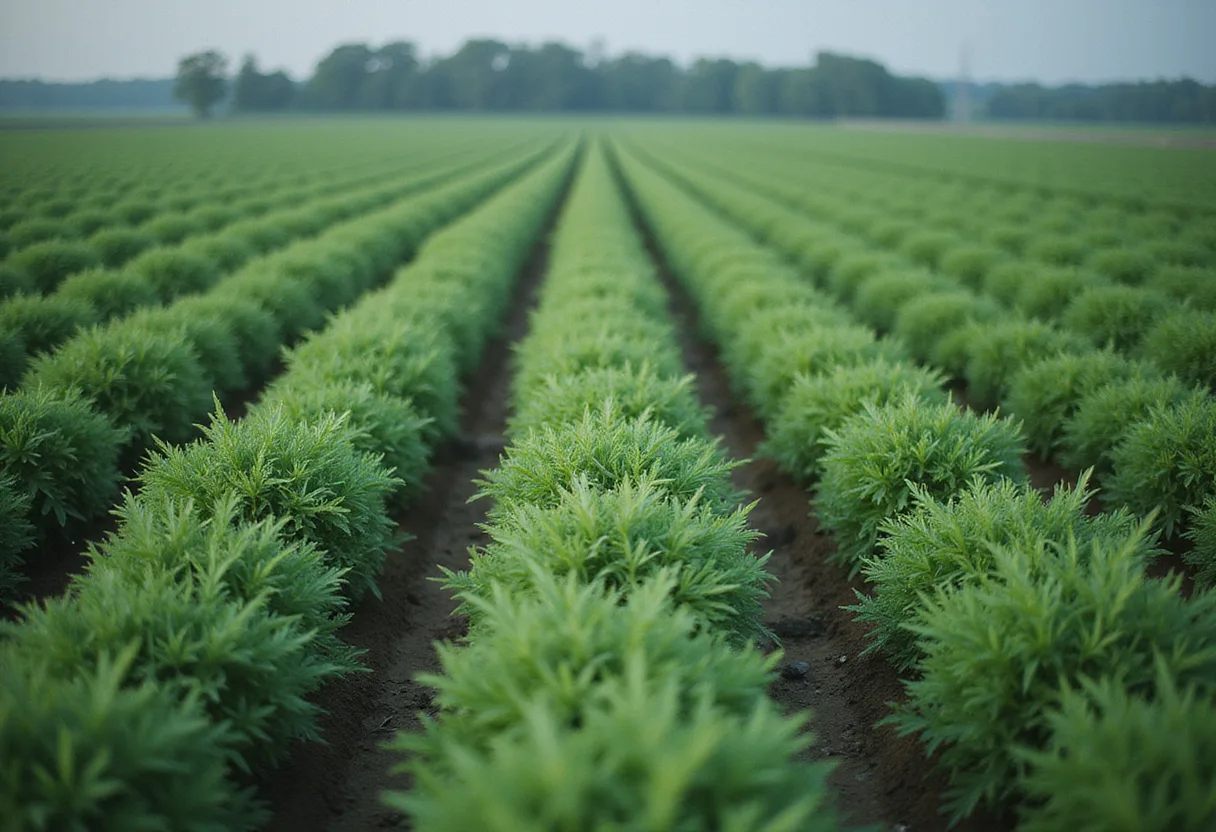
Market research firm IndexBox has published a forecast extending the multispectral camera market out to 2035, and it names one demand driver above all: precision agriculture. The headline finding is the horizon itself — a decade-long projection window for a sensor category that, ten years ago, sat mostly on research drones and experimental plots.
The report positions multispectral imaging as a working input decision tool rather than a novelty. These cameras capture reflectance across specific wavelength bands, which lets agronomists estimate crop vigor, chlorophyll levels, canopy cover and stress indicators from drone, aircraft or satellite platforms. Growers use that imagery to zone nitrogen applications, time irrigation and scout for disease earlier than a windshield survey allows.
What is actually in the report?
That is where a caveat belongs. The source material available for this story is thin. It confirms three things:
- The market runs through 2035 as the forecast endpoint.
- Precision agriculture is identified as the primary demand driver.
- IndexBox is the publisher of the market assessment.
No dollar valuation, compound growth rate, regional breakdown or vendor ranking appears in the accessible summary. Any of those figures circulating in secondary coverage should be traced back to the full IndexBox report before a grower or input supplier acts on them.
Why the technology matters at field level
For farm margins, the argument for multispectral sensing is straightforward: input costs are the largest controllable line item in most row-crop budgets, and variable-rate application is the main way to cut them without sacrificing yield. Multispectral imagery supplies the field-zone data that variable-rate prescriptions require.
The buyer base has shifted accordingly. Equipment manufacturers now embed or bundle multispectral sensors with sprayers and spreaders. Drone service contractors sell imagery as a subscription. Satellite operators — public programs and commercial constellations alike — push the same data layer at declining per-acre cost. None of that appears itemized in the IndexBox summary, but it is the competitive backdrop the 2035 forecast rests on.
How to read any market forecast of this kind
A projection to 2035 carries wide error bars, and methodology is everything. Survey scope, which vendors get counted, whether hardware and services are combined, and the base year chosen all move the headline number materially. Two research houses can publish growth rates for the same product category that differ by a factor of two purely on definitional grounds.
IndexBox has not stated its survey base in the accessible material, so the appropriate stance here is verification, not endorsement — the forecast's value depends on a methodology section this summary does not show.
For now, the defensible reading is this: analysts see enough structural demand from precision agriculture to justify modeling the multispectral camera market on a decade horizon, and the full report's underlying figures will determine whether that optimism survives scrutiny.
via Google News: Precision agriculture (Source)
More from Olivia Hart
Show full bio
News editor covering technology and product news in Agribusiness coverage for industry professionals at Agribusiness Wire.
419 articles
Also in the yard
- Optical Imaging and Spectroscopy Move Into Precision Agriculture
- Weather, WASDE, Yields and Demand Drive Grain Pricing Decisions
- Drone Surveying Growth Headline Carries No Supporting Data
- USDA ARS Publication Maps Benefits and Tech Lineage of Precision Agriculture
- Precision Agriculture's Role in Sustainable Farming Under Examination