Lot No. LOT-8229 · offered October 9, 2026
Trade & ExportsLot sheet
Pork Wins Tariff Relief Slot in U.S.-China 30-for-30 Framework
U.S. pork landed on a $30 billion tariff-relief list in the U.S.-China 30-for-30 framework, but cuts await each country's legal process and a working group meeting by year-end.
Market notes
- U.S.-China '30-for-30' framework cuts tariffs on roughly $30 billion of goods per side; the U.S. list of 1,619 items includes pork, live hogs, beef, corn, wheat and dairy.
- The Busan trade truce was extended two months, from Nov. 10 to Jan. 10, after the Sept. 24 Trump-Xi meeting.
- China remains the top market for U.S. pork variety meats, which still face a 47% duty; soybeans were left off and keep a 10% retaliatory duty.
- USDA on Sept. 17 directed all 21 federal checkoff programs, including the Pork Checkoff, to end ESG-linked research and promotion.
- National on-highway diesel prices are up nearly 60% from a year ago heading into harvest.
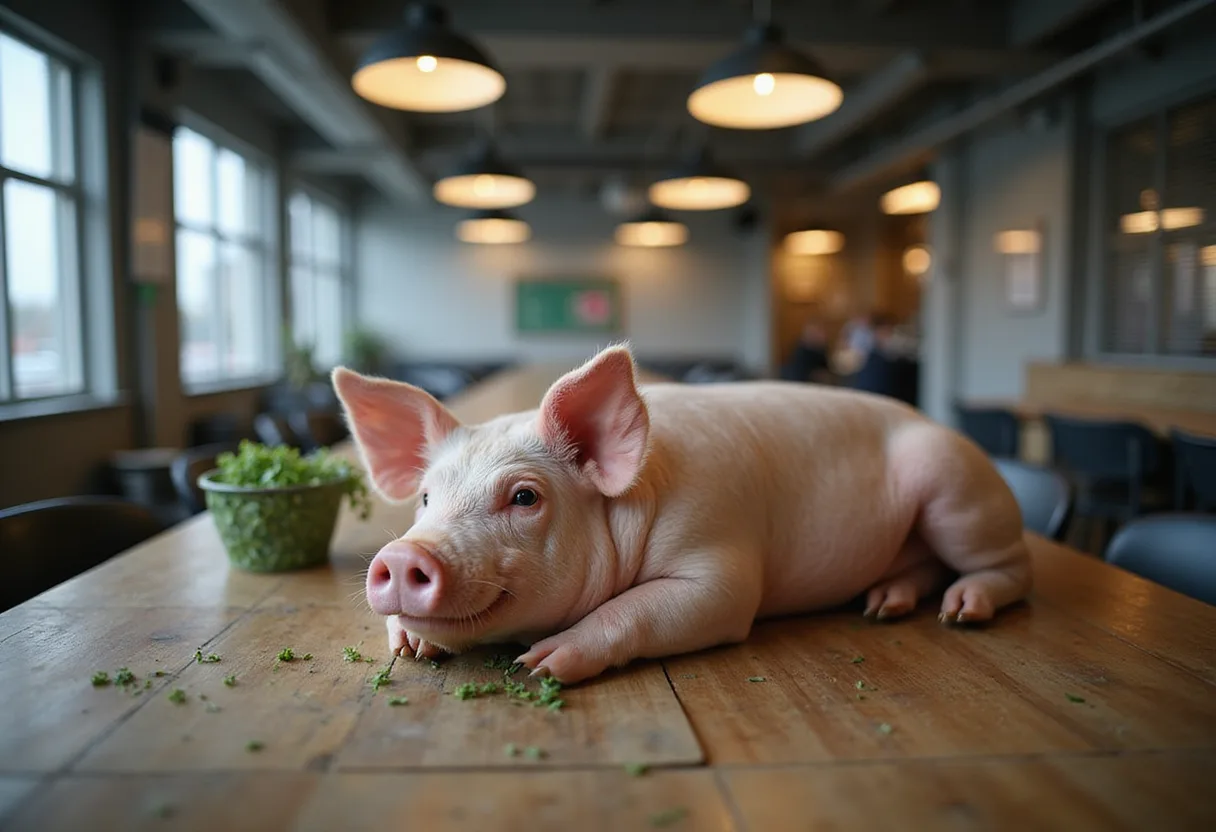
U.S. pork made the cut on a tariff-relief list covering roughly $30 billion in American goods under the new U.S.-China "30-for-30" framework, while soybeans were left off and still face a 10% retaliatory duty. The White House released details days after President Trump hosted Chinese President Xi Jinping in Washington on Sept. 24, a meeting that first produced a two-month extension of the Busan trade truce, pushing its expiration from Nov. 10 to Jan. 10.
The U.S. list spans 1,619 items, including live hogs, pork, beef, other meats, corn, wheat and dairy. Soybean meal, cake and oil are included even though whole beans are not.
The inclusion matters directly for producer margins: China remains the largest market for U.S. pork variety meats, which still carry a 47% duty, and pork and beef also face non-tariff barriers there, including inconsistent inspection and testing requirements. Relief is not immediate. The White House noted that tariff reductions will be implemented through each country's domestic legal process, and a technical agricultural working group under the new U.S.-China Board of Trade is scheduled to meet before the end of the year.
Treasury Secretary Scott Bessent said China has been meeting its soybean purchase pledge but is running behind on a separate commitment to buy about $17 billion in U.S. farm goods. The two leaders are expected to meet twice more this year, at the APEC summit in China in November and the G20 in Miami in December.
What else is moving on trade?
The administration's tariff authority faces a new court test. On Sept. 30, a three-judge panel at the U.S. Court of International Trade heard arguments in a challenge to Section 301 tariffs that the U.S. Trade Representative imposed in July — duties of 10% to 12.5% on goods from 60 economies over alleged failures to enforce bans on forced-labor products. Those duties effectively replaced the temporary Section 122 tariffs that followed the Supreme Court's decision striking down the IEEPA tariffs.
The Canada dispute is also unresolved. A ban on imports of Canadian whey, alcohol and motorcycles took effect Sept. 29, tied to complaints over Canada's handling of dairy market access under USMCA. Pork has not been targeted. President Trump predicted Canada would return to the negotiating table within three or four weeks.
When will the farm bill move?
Following the Senate Agriculture Committee's party-line approval of its farm bill in mid-September, the question is whether House and Senate negotiators can close a final package. Senate Agriculture Chairman John Boozman, R-Ark., said his staff is already meeting with the staff of House Agriculture Chairman Glenn "GT" Thompson, R-Pa., and that he wants Democrats at the table during the October recess so a bill is ready when lawmakers return.
The main sticking point remains new SNAP costs for states. Boozman has called his offer of a one-year delay before some states face those costs his best and final offer. Senate Agriculture Ranking Member Amy Klobuchar, D-Minn., has said Democrats want to pass a bill this year. Sen. John Hoeven, R-N.D., predicted passage in the lame-duck session, possibly attached to a supplemental or reconciliation bill, while Sen. Chuck Grassley, R-Iowa, pushed for a floor vote before the recess.
The Senate wraps up this week and, like the House, does not return until Nov. 9, after the Nov. 3 midterms. Departing House Agriculture Ranking Member Angie Craig, D-Minn., has endorsed Rep. Shontel Brown, D-Ohio, to succeed her as the committee's top Democrat.
What changes for checkoff dollars?
On Sept. 17, USDA directed all 21 federal checkoff programs, including the Pork Checkoff, to align with administration priorities focused on production, producer profitability and freedom from what it called ideologically driven mandates. A memo from Marketing and Regulatory Programs Undersecretary Dudley Hoskins instructs checkoffs to end research and promotion tied to environmental, social and governance frameworks and to stop producing materials or holding meetings on those topics. Secretary Brooke Rollins separately ordered the dairy checkoff to halt specific sustainability initiatives, including its net-zero work. The directive lands as many food companies still ask suppliers to collect and report greenhouse gas emissions data.
Diesel, personnel and courts
National on-highway diesel prices are up nearly 60% from a year ago heading into harvest. Lawmakers from both parties have floated restricting diesel exports, an idea oil industry groups oppose and Energy Secretary Chris Wright suggested the administration is unlikely to pursue as a blanket ban. Farm groups are instead seeking an IRS waiver allowing trucks to run on tax-exempt dyed farm diesel without penalty.
President Trump nominated Greg Ibach, who led USDA's marketing and regulatory programs during the first Trump administration, as Undersecretary for Trade and Foreign Agricultural Affairs, replacing Luke Lindberg, now appointed to lead the U.N. World Food Programme. A federal judge extended the hold on USDA's reorganization until Oct. 13.
Most of what was announced still requires implementation, and the key decision points cluster after Election Day — from whether the Board of Trade's agricultural working group converts the 30-for-30 list into actual tariff cuts for pork, to the trade court's Section 301 ruling and Senate action on Ibach's nomination.
via nationalhogfarmer.com (Original)
More from Olivia Hart
Show full bio
News editor covering technology and product news in Agribusiness coverage for industry professionals at Agribusiness Wire.
422 articles
Also in the yard
- US and China Agree to Cut Tariffs on $60 Billion in Goods
- White House '30-for-30' China Tariff Framework Covers $60 Billion in Trade
- China Signals Tariff Relief for U.S. Farm Trade Post Trump-Xi Talks
- China and US Move Toward Farm Tariff Cuts in Major Win for Agricultural Trade
- Study: Shifting U.S.-China Trade From Feed to Food Could Cut Footprint