Lot No. LOT-3831 · offered October 13, 2026
Seeds, Crop Protection & FertilizerLot sheet
Tar Spot Pressure Puts Fungicide Timing at Center of Corn Decisions
Advance Agrilytics agronomist Dan Emmert says fungicide timing, pollination and nitrogen uptake now drive mid-season corn management as tar spot pressure builds across the Corn Belt.
Market notes
- Advance Agrilytics lead agronomist Dan Emmert is advising southwest Indiana growers on mid-season fungicide timing as tar spot pressure builds in the Corn Belt.
- Emmert says fungicide timing, pollination and nutrient uptake are being evaluated together to improve crop management for next season.
- Mid-season scouting results will feed directly into next year's input and crop management planning.
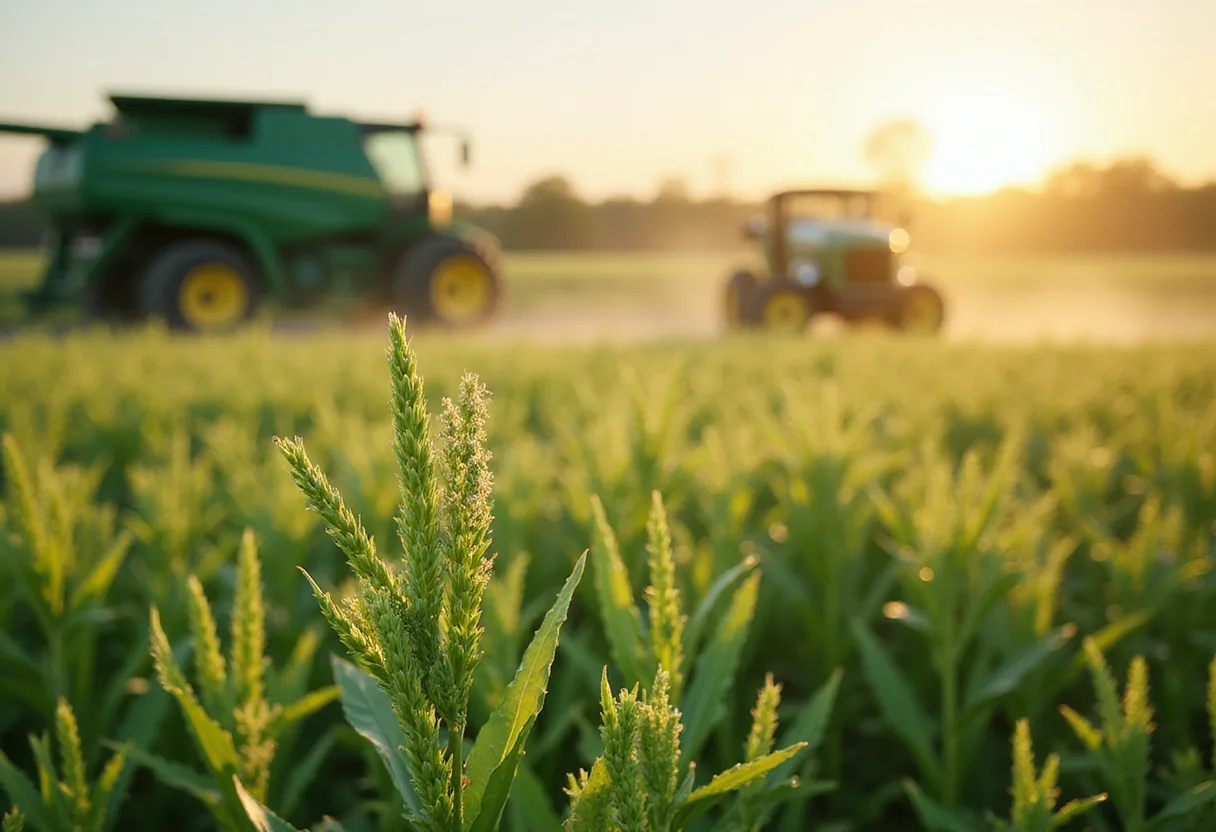
Tar spot has moved to the top of the Corn Belt disease watch list, and mid-season fungicide timing is now the decision that will shape corn yield potential in southwest Indiana.
Dan Emmert, a lead agronomist with Advance Agrilytics, tracks that decision daily across client fields in the region. He told Brownfield that his team is weighing several factors at once: fungicide timing, pollination progress, and nutrient uptake. Each one affects whether a corn plant finishes the season with enough leaf area and nitrogen to fill the ear.
The stakes are straightforward. Tar spot defoliates corn from the bottom of the canopy upward. A fungicide applied too early can wear off before the disease arrives in force. An application made too late protects leaves that the pathogen has already damaged. Pollination narrows that window further, because a crop under moisture or nutrient stress during tasseling sets fewer kernels no matter how clean the leaf tissue stays.
What does the timing question change for growers?
For producers, the practical question is what this changes for input budgets. The answer, in Emmert's framing, is that fungicide and nitrogen decisions cannot be made separately. Nutrient uptake determines how long the plant stays green, and how long the plant stays green determines how much a fungicide investment can return. A field short on nitrogen gives a fungicide less healthy tissue to protect.
That logic runs in both directions. Emmert says the observations gathered this season — how crops progressed, where tar spot appeared, how pollination held up — will feed directly into crop management planning for next year. Mid-season scouting, in other words, is not only about protecting the current crop. It is also the data-gathering pass that sets input plans twelve months out.
A disease that keeps expanding its range
Tar spot deserves the attention. The disease, caused by the fungus Phyllachora maydis, arrived in the United States from Latin America and has spread across the Corn Belt since first detection, thriving in cool, humid conditions and capable of cutting yields sharply in severe years. Its arrival forced many growers to add a fungicide pass that older corn budgets never carried.
That added pass sits in a tight margin environment. Growers weighing a fungicide application are balancing product and application costs against the price of corn and the disease pressure in each field, and agronomists like Emmert are the ones translating field observations into that economic call.
Advance Agrilytics positions its agronomists close to the ground for exactly this reason. Emmert works directly with growers in southwest Indiana, where field-by-field variation in planting date, hybrid maturity and disease pressure makes a single blanket recommendation impossible.
The work now is watchful rather than dramatic. Fields are moving through pollination, canopies are closing, and the conditions that favor tar spot are the same conditions that favor the crop. Emmert's team will keep reading leaf tissue, tassels and nitrogen status together, and the lessons from this season will shape how southwest Indiana growers budget fungicide and nitrogen dollars when planning resumes for next year.
via Brownfield Ag News (Source)
More from Marcus Bennett
Show full bio
Senior reporter covering regulation, policy and their impact on Agribusiness coverage for industry professionals at Agribusiness Wire.
412 articles
Also in the yard
- Researchers warn second fungal disease could match tar spot's corn losses
- First 2026 Tar Spot Cases Confirmed in Pennsylvania Corn
- CropLife Posts Six-Point Retailer Guide for Managing Corn Tar Spot
- Fine-Tuned Fertilizer Use Offers Corn Growers a Path to Lower Input Bills
- Wet October Slows Western Illinois Harvest; Lodged Corn, Soybeans Pile On