Lot No. LOT-4078 · offered October 9, 2026
Precision Agriculture & AgTechLot sheet
TerraBlaster Raises $12.5M Seed for Real-Time NPK Soil Mapping
TerraBlaster closed a $12.5M seed round for LIBS sensors mapping NPK, pH at 0.15-acre resolution and tractor speed, with commercial launch set for spring 2027.
Market notes
- TerraBlaster raised a $12.5M seed round led by Ulu Ventures, taking cumulative funding to $16.5M.
- The Blaster 1,000 maps soil nutrients at 0.15-acre resolution and measures about 20 times per second.
- Commercial systems are scheduled for delivery in spring 2027, with a pre-sale opening this fall.
- Heraud claims $10/acre in sampling savings plus $35/acre yield gains for corn and soy.
- CEO Jorge Heraud previously cofounded Blue River Technology, sold to John Deere for $305M.
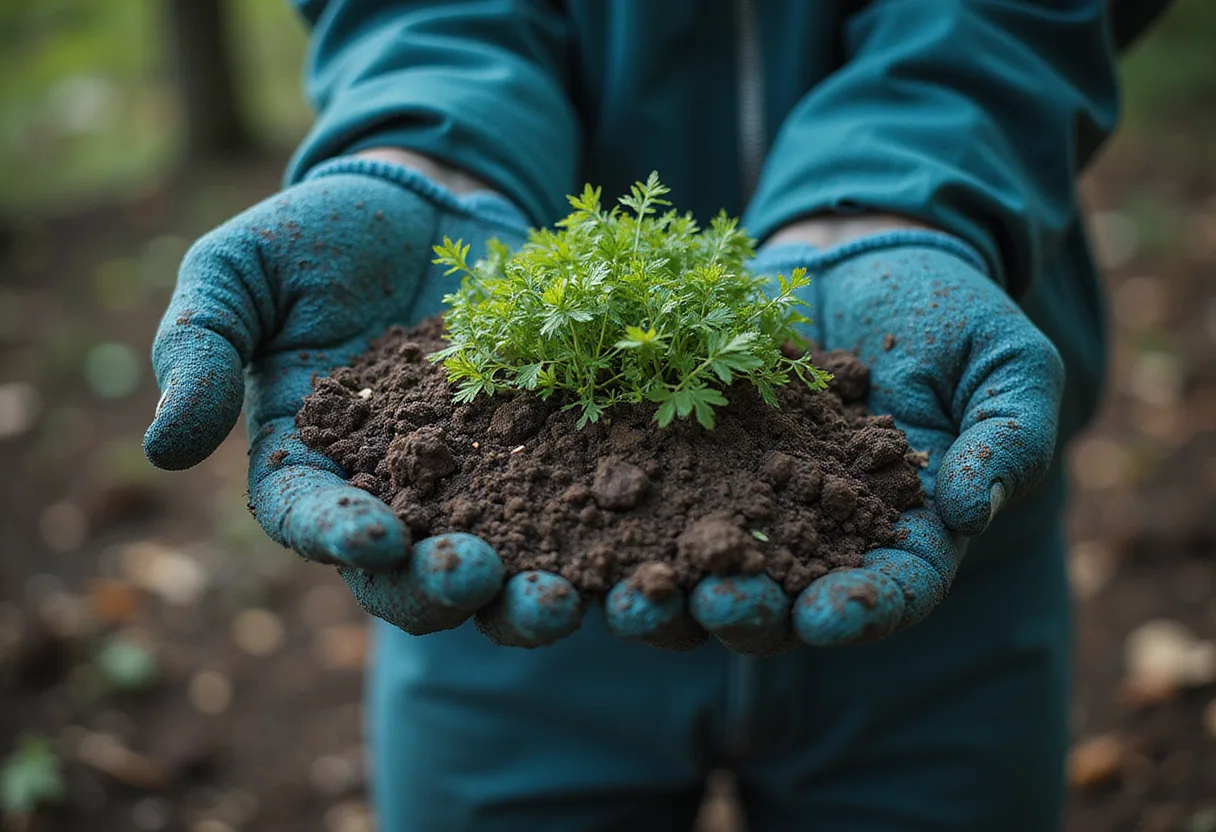
TerraBlaster has closed a $12.5 million seed round to scale a laser-based sensor that measures nitrogen, phosphorus, potassium, pH and other soil properties in real time at tractor speed, bringing the California startup's cumulative funding to $16.5 million ahead of planned commercial delivery in spring 2027.
Ulu Ventures led the round, with participation from Khosla Ventures, Trailhead Capital, Builders Vision, Bidra, Ag Startup Engine, Reservoir, Sunna, Plug and Play, GrainInnovate, and the Hort Innovation Venture Fund managed by Artesian.
"With our technology, there's no reason to suffer suboptimal yields by applying nutrients to a field based on low-resolution or old measurements," cofounder and CEO Jorge Heraud said. "We are quickly moving to a future where real-time measurements enable precise soil fertilization, all in one pass."
Heraud previously cofounded ag robotics firm Blue River Technology, which John Deere acquired for $305 million.
How does the technology work?
TerraBlaster deploys laser-induced breakdown spectroscopy (LIBS), a technique first used on the Mars rover program and licensed through sensing firm Impossible Sensing, which approached Heraud to build the agricultural venture. A high-energy laser pulse vaporizes a tiny soil sample, and the resulting plasma emits a spectral fingerprint that reveals elemental composition—without lab testing.
The first product, the Blaster 1,000, is a towed unit that opens a shallow trench about six inches deep and measures soil fertility roughly twenty times per second while moving. It generates nutrient maps at 0.15-acre resolution. "That's an area of about 80 by 80 feet, which matches the working width of application equipment already in the field," Heraud said.
The device currently operates at 5mph. Heraud expects to double that to 10mph soon and ultimately reach 20mph with a narrower probe.
What does finer resolution mean for input costs?
Heraud contrasts his system with conventional soil sampling, where crews collect, mix and bag samples, then wait days for lab results. Most farmers sample on roughly 2.5-acre grids, a resolution that masks variability: a plot reading as uniformly sufficient in potassium at that scale can contain both deficient and excessive zones when mapped at 0.15 acres. The result, he argues, is systematic over- and under-application of fertilizer and yield left on the table, while denser sampling becomes prohibitively expensive.
The company claims the economics favor switching:
- About $10 per acre saved on lab testing, sampling and shipping costs
- Roughly $35 per acre in yield gains for corn and soy
- Yield gains up to 20% in the most deficient field areas
Heraud says the data remains actionable with standard fertilizer spreading equipment, since variable-rate application is already common. Hardware pricing is still being finalized, but he commits that the system will not cost growers more than they currently pay for soil sampling.
The company's figures are projections tied to field type and crop rather than harvested results. TerraBlaster tested extensively in Iowa last year and is running demos with growers and retailers across the Midwest this fall; those learnings will shape the systems delivered in spring 2027.
What comes next?
The go-to-market plan targets row-crop growers plus the retailers and agronomists supporting them. Commitments for the first systems are already in place ahead of a pre-sale opening this fall.
A second mode would integrate sensing into operations farmers already perform. "You can be measuring as you're planting," Heraud said. The longer-term goal is a combined measure-and-apply system, particularly valuable for mobile nutrients like nitrogen and sulfur that shift after rainfall. The Blaster 1,000 measures nutrients only; TerraBlaster plans to test an integrated measure-and-apply system in 2028.
On the funding climate, Heraud acknowledged that investor attention has shifted toward AI, making it "a challenging environment" for agtech—but noted that Blue River raised capital just one year after the Great Recession, arguing that down-cycle investments at reasonable valuations tend to produce the highest returns.
With commercial units slated for spring 2027 and an integrated application system in testing the following year, TerraBlaster will need Midwest demo results this fall to validate its per-acre economics before the pre-sale opens.
via khoslaventures.com (Original)
More from Grace Kim
Show full bio
Correspondent covering people, launches and day-to-day practice in Agribusiness coverage for industry professionals at Agribusiness Wire.
453 articles
Also in the yard
- Optical Imaging and Spectroscopy Move Into Precision Agriculture
- Midwestern BioAg-IFDC Study: Organ-Mineral Fertilizers Match Conventional
- Carbon Robotics Tops $100M Revenue, Maps Path to Ag Robotics IPO
- CropX Acquires NIR Specialist SCIO, Eyes $20M ARR and 2027 Profit
- PlantVoice Brings 'Plant Intelligence' to Precision Agriculture