Lot No. LOT-8159 · offered October 9, 2026
Crop EconomicsLot sheet
Brownton grower tracks soybean yields near 80 bushels per acre
Brownton, Minn., farmer Ryan Mackenthun reports soybean yields between the mid-60s and nearly 80 bushels per acre, a range he now expects to set a farm record as central Minnesota harvest advances.
Market notes
- Bean yields range from the mid-60s to nearly 80 bushels per acre on Ryan Mackenthun's Brownton, Minn., farm
- Mackenthun raises both corn and soybeans in central Minnesota
- Mackenthun shifted from skeptical to record outlook over a one-week span
- The upper end of the yield range would push the farm above recent regional soybean benchmarks
- Corn harvest in the region typically trails soybeans by several weeks
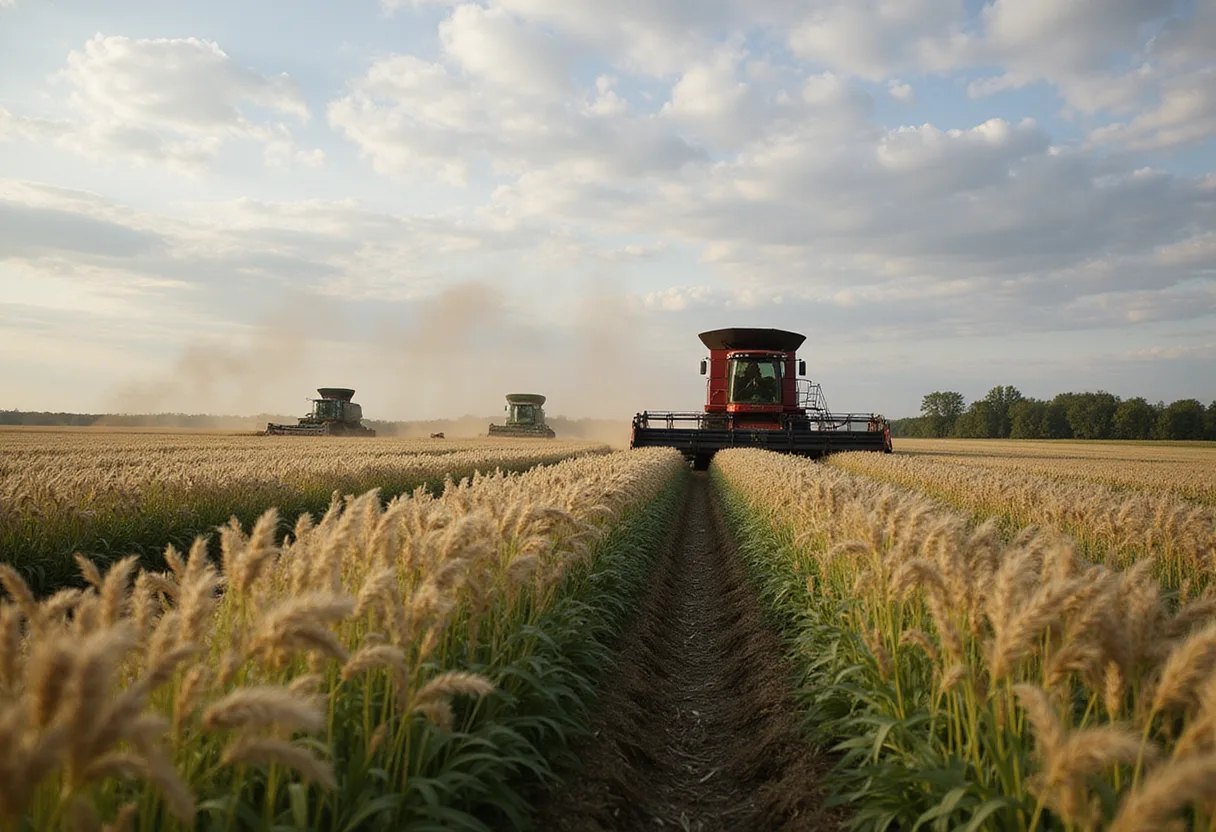
Brownton, Minn., farmer Ryan Mackenthun is reporting soybean yields between the mid-60s and nearly 80 bushels per acre as harvest advances across his central Minnesota operation.
The corn-and-soybean grower said the latest field results have moved his outlook into record territory. "I was a little skeptical to say record here a week ago, but I think they're going to be," Mackenthun said.
What do the early field numbers show?
Mackenthun's reported range — mid-60s to nearly 80 bushels per acre — captures the spread across soybean fields he has already combined. The upper end of that range would push his whole-farm bean average above benchmarks that have held across the central Minnesota crop belt in recent seasons.
Whole-farm soybean averages running in the upper 70-bushel range would register as exceptional for the region. Yield claims of that magnitude typically draw attention from local elevators, seed representatives, and county agronomists who track harvest monitor readings as combines move through McLeod and surrounding counties.
How can a one-week view shift that quickly?
Mackenthun's revised outlook reflects how yield assessments can move sharply in the back half of a soybean harvest. Each combine pass adds another data point to the farm's running average, and a string of high-yield fields can reset expectations within days.
The bulk of central Minnesota's soybean crop typically comes off in October, when combines deliver the first whole-farm measure of the season's pod-fill performance. Growers often withhold record claims until enough acres are cut to anchor the average rather than relying on the first few fields off the farm.
Where do the corn numbers stand?
Mackenthun raises corn alongside soybeans, and his on-the-record comments focused on the bean side of the rotation. Corn harvest in the region typically trails soybeans by several weeks, with grain moisture, test weight, and final kernel weight shaping the yield calculation.
A true whole-farm yield record requires both crops to deliver. A standout bean year paired with average-to-strong corn can still produce a record revenue or margin line, depending on cash prices at the elevator and basis levels through the fall.
What will the next two weeks tell?
The remaining soybean acres on Mackenthun's operation will determine whether the early field numbers translate into a confirmed farm record. If later fields continue running in the 70-bushel range, the season establishes a new benchmark; if they settle back toward the mid-60s, the year ends as a strong harvest rather than a record one.
The corn side of the ledger will then settle the question of whether the year sets a whole-farm record or merely a bean benchmark for the operation.
Forward outlook
As combines finish the soybean pass across central Minnesota, the next two weeks of harvest reports from Mackenthun's farm and neighboring operations will clarify whether his early bean numbers represent a regional trend or a single-farm result.
via Brownfield Ag News (Source)
More from Rebecca Stone
Show full bio
Market editor covering people, launches and day-to-day practice in Agribusiness coverage for industry professionals at Agribusiness Wire.
430 articles
Also in the yard
- Minnesota Soybean Harvest at 14%, Trails Five-Year Average of 23%
- September WASDE to Test USDA's 180.7 bpa Corn Yield
- Michigan Corn, Soybeans Lag Averages but Look Better Than Expected
- Minnesota Harvest Trails Five-Year Average by Wide Margin
- Soybean Harvest at 17%, Below Every Trade Estimate, USDA Says