Lot No. LOT-9656 · offered October 9, 2026
Seeds, Crop Protection & FertilizerLot sheet
China launches unified seed IP regime to protect breeders
China has launched a new intellectual property regime for seeds, calling it 'a landmark achievement' aimed at spurring cultivar innovation and protecting breeders' rights across the world's second-largest seed market.
Market notes
- China launched a new unified seed intellectual property regime
- The framework is described as 'a landmark achievement' by AgNavigator
- Stated goals: spur cultivar innovation and protect breeders' rights
- China is the world's second-largest seed market
- The regime sits inside Beijing's broader push to lift yields and attract private plant-breeding capital
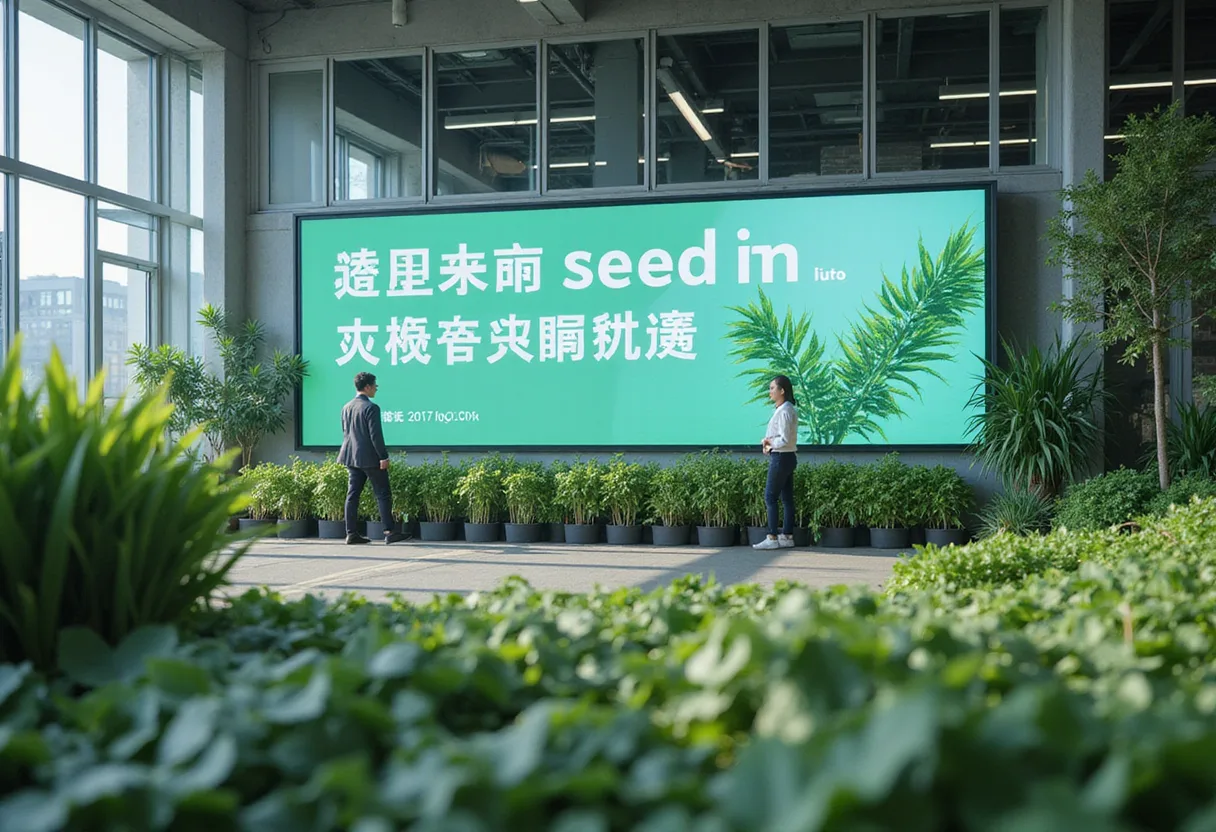
China has launched a new intellectual property regime for seeds, a move described as "a landmark achievement" aimed at spurring cultivar innovation and protecting breeders' rights across the world's second-largest seed market.
The announcement, first reported by AgNavigator, frames the framework as a centerpiece of Beijing's effort to lift crop yields, attract private plant-breeding capital and curb unauthorized propagation of proprietary hybrids.
What sits inside the new regime?
China's seed sector has run for years on a patchwork of plant variety protection rules that breeders say failed to deter unlicensed reproduction of proprietary genetics. A unified IP regime consolidates those rules and gives breeders a clearer path to damages when their varieties are multiplied without authorization.
The standard reference point for such frameworks is the International Union for the Protection of New Varieties of Plants convention. Strong PVP systems extend protection to harvested material and derivative varieties - provisions that materially raise the present value of a new cultivar release for the breeder, and that draw private investment toward long-cycle breeding programs that pure seed sales rarely fund.
Why it matters for input makers
China is a sizeable market for corn, rice, wheat, soybean and vegetable seed. A credibly enforced IP regime redraws the calculus for both domestic breeders and the multinational firms that have long argued their genetics are reproduced without compensation.
Royalty streams, licensing terms and the decision to release new hybrids into the Chinese market all hinge on whether a new law is more than a statute on paper. Input companies watch these frameworks closely because the volume of seed sold, multiplied and resold in China makes enforcement a literal bottom-line question, not an abstract policy debate.
Domestic seed firms, many of which have consolidated over the past decade under Beijing's seed industry revitalization push, also gain. A clearer IP framework rewards the cross-pollination and selection work that goes into a new hybrid and lifts the value of their own breeding pipelines.
Where enforcement does the real work
A statute changes behavior only if courts and provincial agriculture agencies enforce it. Counterfeit seed has long circulated in China's domestic grain trade, and the credibility of any new IP regime will rest on three practical tests:
- Whether provincial courts handle plant variety cases with expertise and timeliness
- Whether DNA fingerprinting and other technical tools are deployed at commercial scale
- Whether damages awarded to breeders reflect actual economic loss, not token penalties
The read-through for U.S. growers
For American farmers and seed retailers, the regime's commercial payoff turns on whether Chinese authorities grant the same scope of protection to foreign-developed varieties that they extend to domestic cultivars. Prior rounds of reform narrowed but did not close that gap, and U.S. seed exporters will be watching the implementing text closely.
Cooperative elevator managers and large-scale grain producers will care most about the second-order effects: which new corn hybrids, soybean varieties or rice lines appear in the official approval pipeline, and on what royalty terms.
For growers, the commercial question is whether stronger IP protections translate into higher seed costs, narrower variety choices or a faster pipeline of improved genetics. Tighter PVP regimes typically pull more private capital into breeding, which over a multi-year horizon delivers traits that command a premium in the field - drought tolerance, herbicide tolerance, disease resistance - that otherwise might not move from research plot to seed bag.
What comes next
AgNavigator's framing of the move as "a landmark achievement" sets a high bar. The harder data points will arrive in the months ahead: implementing regulations, the staffing of variety-examination panels, and the first reported enforcement actions.
Breeders, input company executives and farm-group policy staff will be watching whether royalty collections rise and whether unauthorized propagation cases move through Chinese provincial courts at a commercially meaningful pace. That is where a regime either becomes a structural shift - or remains an announcement on paper.
via Google News: Seed industry (Source)
More from Olivia Hart
Show full bio
News editor covering technology and product news in Agribusiness coverage for industry professionals at Agribusiness Wire.
420 articles
Also in the yard
- China unveils plant breeding IP framework to accelerate seed innovation
- China Issues New Guideline to Strengthen Plant Variety Protections
- China's Top Court Strengthens IP Protection for Seed Industry
- China Targets Seed Industry Self-Reliance, Minister Says
- China's Top Court Strengthens IP Protection for Seeds