Lot No. LOT-2211 · offered October 13, 2026
Crop EconomicsLot sheet
Drought Cuts Kansas Soybean Yields Below Trend, Grower Reports
Central Kansas farmer Rick Schlender reports soybean yields well below trend line, citing heat during pod set and fill as harvest opens slow across the drought-hit region.
Market notes
- Central Kansas soybean yields are running well below trend line, grower Rick Schlender reports.
- Heat during pod set and fill period drove the yield loss, Schlender said.
- Irrigated soybean yields are expected to be 'all over the board,' according to Schlender.
- Harvest start in central Kansas has been slow and disappointing, per the field report.
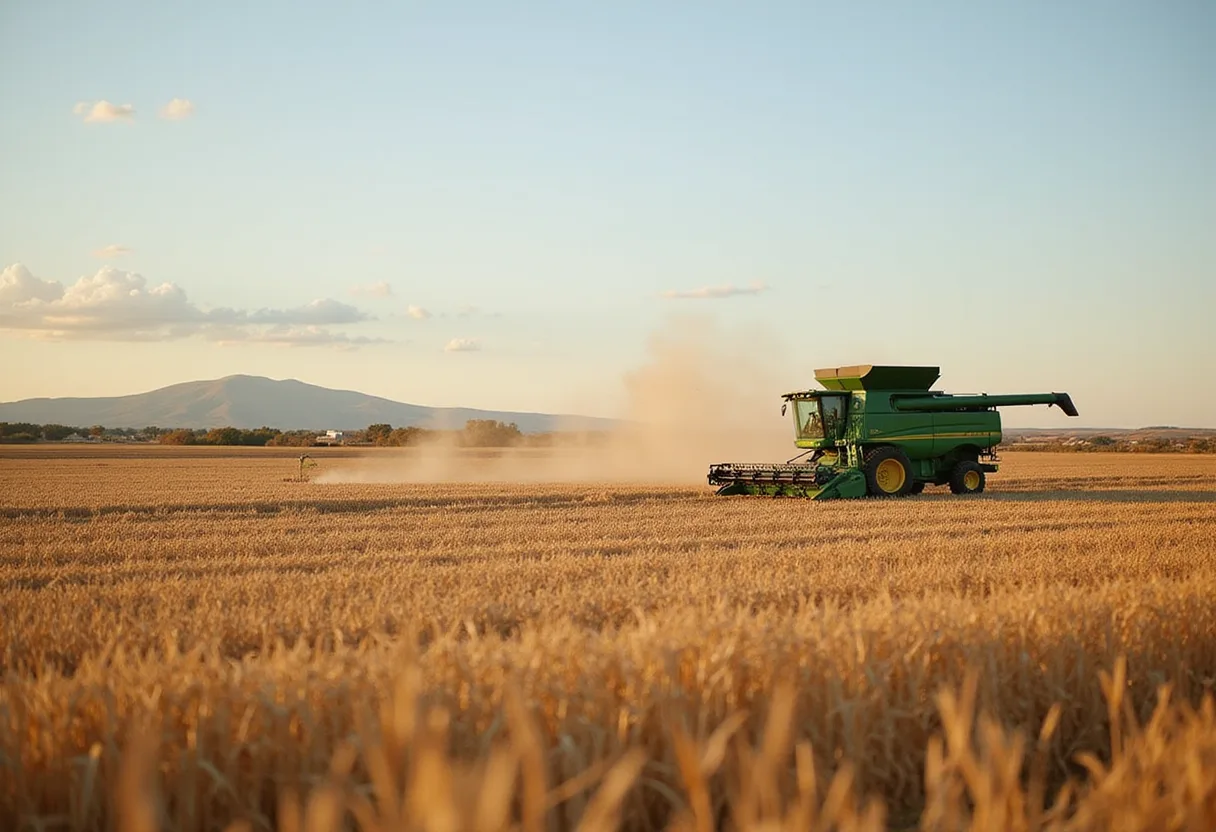
Soybean yields in central Kansas are running well below trend line, and Rick Schlender, who farms in the heart of the state, is not waiting for the combine to finish to say so. "The heat during pod set and fill period has hurt us in that regard," Schlender told Brownfield, describing a sluggish and disappointing opening to harvest.
His assessment is a condition report from the field, not a harvested result. That distinction matters for anyone using early Kansas numbers to price the crop or project supplies. Schlender's comments reflect what one farmer is seeing as cutting begins — not weighted, surveyed state averages of the kind USDA compiles.
What does the drought actually cost?
Schlender points to a specific agronomic window as the culprit: heat that arrived during pod set and fill. That timing is the critical one for soybeans. When temperatures spike while pods are forming and filling, the plant sets fewer seeds and fills them less fully, and no amount of late rain reverses it.
The damage is uneven. Irrigated fields, Schlender says, are "going to be all over the board" — a warning against assuming that one yield number, even within a single operation, tells the story of a county or a region. Dryland fields, which carry the drought directly, sit at the low end of the spread.
He was blunt about expectations. "We'd be fortunate to see" much better than what the early pass is showing, he said. A grower calling his own crop disappointing in the first days of harvest is a signal worth noting.
Why one farmer's report carries weight
Individual harvest reports always arrive ahead of official estimates, and this year Kansas drought conditions make them more consequential, not less. Condition ratings and trend-line projections were built on assumptions that heat during the reproductive window has now tested directly.
The caveat cuts both ways. Schlender farms in central Kansas; his fields do not measure the western wheat-sorghum belt or the eastern counties, where moisture profiles differ. His irrigated acreage may be spread across pumping capacity he did not detail, and he offered no bushel figures in the interview.
What he did offer is direction: below trend line, with heat during the reproductive stage as the stated cause, and variance wide enough that any single field result could mislead.
What growers and buyers should watch next
For margin planning, the practical read is simple. Kansas producers who budgeted around trend-line soybean yields face a revenue gap that insurance guarantees and market basis will partially offset, and irrigators face the added question of whether pumping costs already sunk into the crop were enough to hold yields.
The market-facing question is how widely Schlender's experience repeats across the state. USDA survey-based yield estimates will test early farmer reports against a broader sample, and the gap between the two — if one appears — will shape revisions in the months ahead.
Until those numbers land, the harvest results themselves, field by field, are the only evidence that counts.
via Brownfield Ag News (Source)
More from Olivia Hart
Show full bio
News editor covering technology and product news in Agribusiness coverage for industry professionals at Agribusiness Wire.
421 articles
Also in the yard
- Drought Devastates Soybean Yields Across Central Kansas
- Minnesota Soybean Harvest at 14%, Trails Five-Year Average of 23%
- USDA: 23% of U.S. corn harvested, trails five-year average
- US soybean harvest trails 33% norm at 25%; wheat gains, Black Sea watched
- Soybean Harvest at 17%, Below Every Trade Estimate, USDA Says