Lot No. LOT-9109 · offered October 15, 2026
Farm MachineryLot sheet
Farm Equipment Sales Continue Falling, KMJ Now Reports
KMJ Now reports farm equipment sales continue falling. The headline-level alert carries no unit totals, category splits, or executive comment, leaving readers to consult AEM monthly tractor and combine data for specifics.
Market notes
- KMJ Now, a Fresno-based iHeartMedia outlet, posted a headline reading "Farm Equipment Sales Continue Falling."
- The available report names no manufacturer, dealer, analyst, or product category.
- The standard U.S. farm equipment sales dataset is the Association of Equipment Manufacturers' monthly tractor and combine report.
- The "continue" framing implies a multi-month or multi-quarter contraction in farm capital spending.
- Capital-spending softness has tracked with USDA net farm income projections trending lower since 2023.
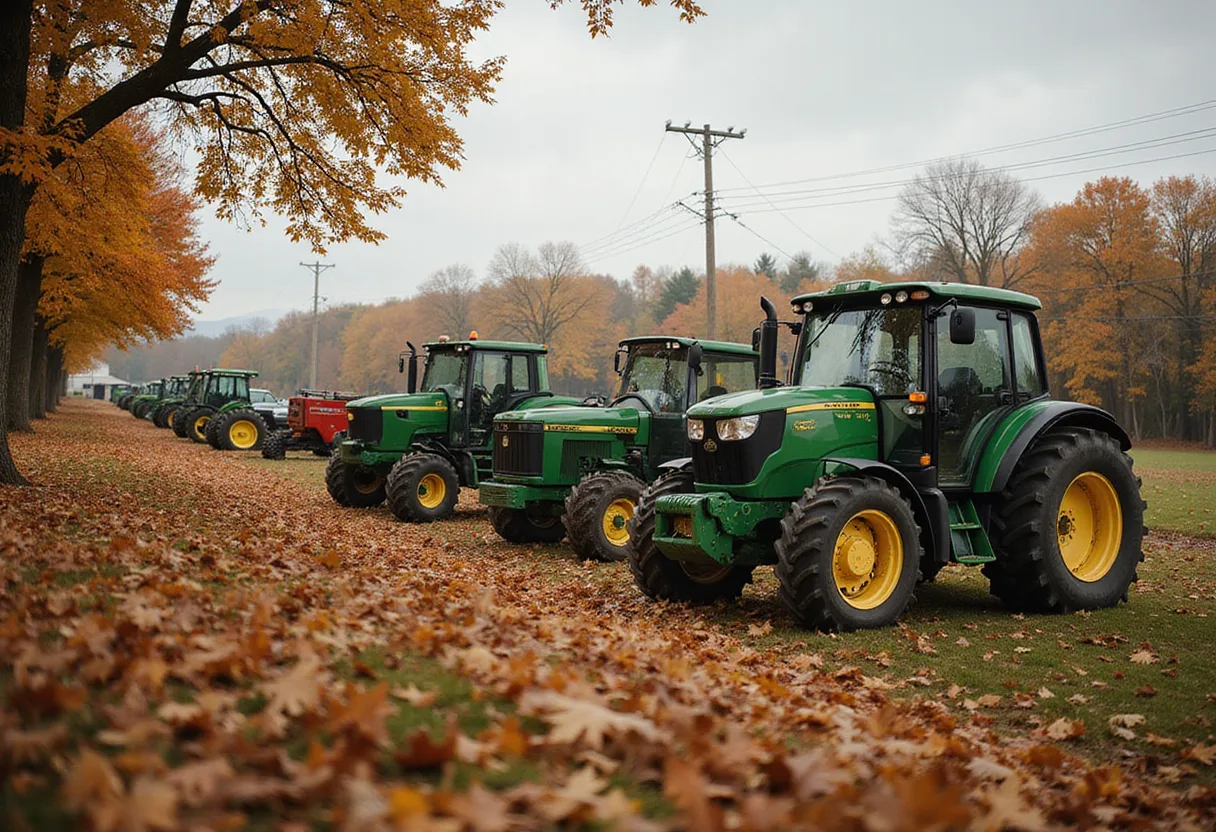
Farm equipment sales continued to decline, according to a report carried by KMJ Now, the Fresno, California-based radio and television outlet owned by iHeartMedia. The headline-level alert provides no specific unit counts, dollar volume, or year-over-year percentage change, leaving the magnitude of the drop undisclosed in the available text.
What did KMJ actually publish?
KMJ posted the item under the headline "Farm Equipment Sales Continue Falling." No equipment manufacturer, dealership, grower, or analyst was named. No product line — 2WD tractors, 4WD tractors, combines, planters, sprayers, or hay tools — was identified. No region was specified beyond the broadcaster's Central California footprint.
Where does the underlying data normally come from?
Industry tracking of farm equipment sales in the United States runs through the Association of Equipment Manufacturers (AEM), which publishes monthly unit-sales reports covering tractor and combine categories. AEM's monthly aggregates, drawn from manufacturer submissions, function as the standard reference cited across agribusiness coverage. The KMJ item does not reference AEM or any other named dataset.
How does the "continue" framing fit the cycle?
The use of "continue" in the headline implies a multi-month or multi-quarter contraction rather than a one-month dip. Capital-spending softness in farm equipment has tracked with USDA net farm income projections that have slipped since 2023, alongside elevated input costs for fertilizer, fuel, and parts. Lower crop prices for corn, soybeans, and cotton have compressed the margins growers use to justify new machinery purchases.
What can a reader take from this report?
Without unit totals, percentage changes, or category splits, the KMJ item functions as a directional signal pointing toward weaker demand rather than a data point with a precise figure attached. Readers looking for the underlying numbers should pull the most recent AEM monthly tractor and combine report or the USDA's quarterly net farm income update. Independent dealer surveys from groups such as the Equipment Dealers Association offer a second cross-check on manufacturer-reported totals.
What's the forward read?
If the next AEM release confirms a further decline, the print would extend the contraction in U.S. farm machinery demand and pressure manufacturer order books, dealer inventories, and the ag-input supply chain that depends on farm capital expenditures through the planting cycle ahead.
via Google News: Farm equipment (Source)
More from Grace Kim
Show full bio
Correspondent covering people, launches and day-to-day practice in Agribusiness coverage for industry professionals at Agribusiness Wire.
450 articles