Lot No. LOT-3376 · offered October 12, 2026
Precision Agriculture & AgTechLot sheet
Nature review maps bioelectronics path from lab bench to field
A Nature review argues plant-worn bioelectronics has matured enough for precision agriculture, promising physiological data that could sharpen water and nutrient decisions.
Market notes
- A review published in Nature argues bioelectronics is ready to bridge basic plant science and precision agriculture
- Plant-attached sensors can read internal electrical and chemical stress signals before visible symptoms appear
- The review identifies field durability, manufacturing cost and scale as the main barriers to commercial adoption
- Grower value centers on applying water and nutrients in response to plant physiology rather than proxy indicators
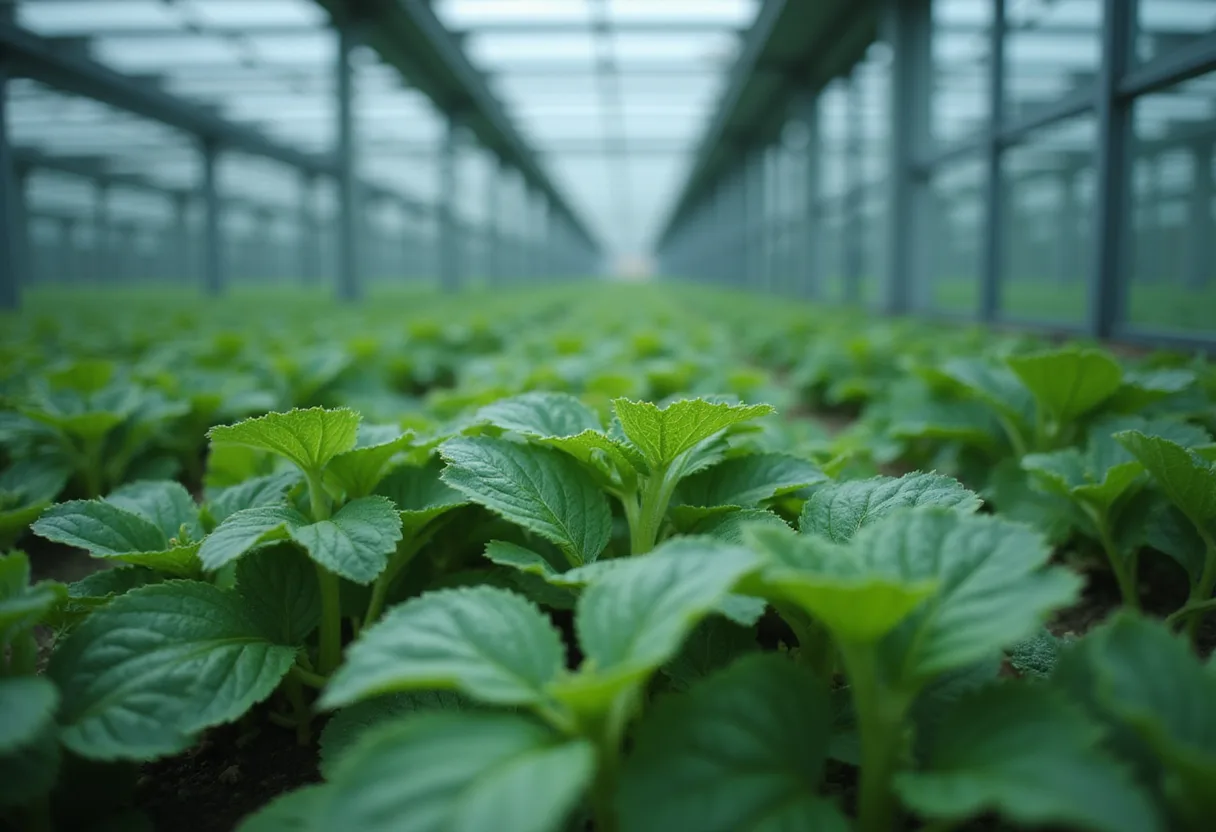
A review published in Nature argues that bioelectronics — devices that interface electronically with living plants — has matured enough to serve both basic plant science and precision agriculture, moving the technology closer to commercial field deployment.
The paper surveys a field that sits at the intersection of materials science, plant physiology and agronomy. Its central claim is direct: the same tools researchers use to probe how plants sense and signal internally can, with engineering adaptation, give growers real-time physiological data that satellite imagery, soil probes and weather models cannot supply.
What can plant bioelectronics actually measure?
According to the review, the technology falls into several functional categories:
- Sensors that read electrical or chemical signals generated by the plant itself, reporting stress responses before visible symptoms appear;
- Devices that interface with plant tissues to monitor water transport, nutrient flow and metabolic state;
- Implantable or attachable platforms built from flexible, biocompatible materials able to conform to stems, leaves and roots.
The authors frame these capabilities as a bridge between two audiences. For plant scientists, bioelectronics offers instrumentation that works inside a living, functioning organism rather than in excised tissue or greenhouses alone. For agricultural engineers and input makers, it promises a data layer keyed to the plant's own physiology — a step beyond proxy measurements.
Why does this matter for farm margins?
The economic logic the review rests on is familiar to any grower managing input costs. Irrigation water, nitrogen and crop-protection products are applied on schedules and zone maps largely inferred from indirect indicators. A sensor reporting the plant's internal water or nutrient status could, in principle, let a producer apply water and fertilizer when the crop signals demand — not when a calendar or a soil-moisture threshold says so.
That shift matters most where margins are thinnest: high-value specialty crops, water-limited regions and operations facing tightening nutrient regulations. The review positions precision agriculture as the natural first market for plant-worn electronics, since those systems already have the data pipelines, variable-rate machinery and decision software to act on physiological signals once they arrive.
What stands between the lab and the field?
The authors do not present bioelectronics as market-ready. The review identifies the gap between controlled-environment demonstrations and durable field performance as the field's core problem. Devices must survive UV exposure, rain, wind, mechanical growth of the plant and microbial degradation across a full season — requirements laboratory prototypes rarely meet.
Scale and cost are the second constraint. A sensor proven on one plant in one experiment is not an agronomic tool; the review's framing implies that meaningful adoption requires manufacturing methods that can produce devices cheaply and in quantity, plus readout systems that integrate with existing farm-management platforms.
What should agribusiness watch next?
For input manufacturers, equipment makers and precision-ag software firms, the review is a signal that plant-physiology sensing is moving from concept toward engineering roadmaps. Watch for field trials that report season-long device survival and yield-responsiveness data — the metrics that will determine whether bioelectronics becomes an input-cost tool or stays a laboratory instrument.
The Nature review suggests the trajectory is now pointing outward from the lab, with the next milestones set by durability, cost and integration rather than by discovery.
via Google News: Precision agriculture (Source)
More from Nathan Brooks
Show full bio
Staff writer covering regulation, policy and their impact on Agribusiness coverage for industry professionals at Agribusiness Wire.
470 articles
Also in the yard
- UGA's 19th GRA Eminent Scholar Builds Plant Sensors to Flag Drought, Disease Early
- Nature: Cellulose Sensors Offer Decentralized Precision Ag Monitoring
- PlantVoice Brings 'Plant Intelligence' to Precision Agriculture
- What Satellite Imagery Can and Cannot Tell Growers About Crop Health
- CropX Acquires NIR Specialist SCIO, Eyes $20M ARR and 2027 Profit