Lot No. LOT-9831 · offered October 9, 2026
Precision Agriculture & AgTechLot sheet
Nature paper targets extension agent training for precision agriculture
A Nature study calls for standardized competency assessments for extension agents advising farmers on precision agriculture, arguing human infrastructure is the binding constraint as smart farming tools spread across row-crop operations.
Market notes
- Nature published 'Strengthening human infrastructure for smart farming through competency-based assessment of extension agents in precision agriculture'
- The paper proposes competency-based certification extending the CCA-style model to digital skills such as telemetry interpretation and prescription-map troubleshooting
- Conventional certifications, including the Certified Crop Adviser program run by the American Society of Agronomy, do not currently test those data-literacy skills
- The study does not identify which institutions would administer assessments, how costs would be allocated, or whether mandatory continuing-education hours would apply
- Any rollout would require coordination with land-grant universities, state cooperative extension services, the CCA governing board, and private-sector input retailers
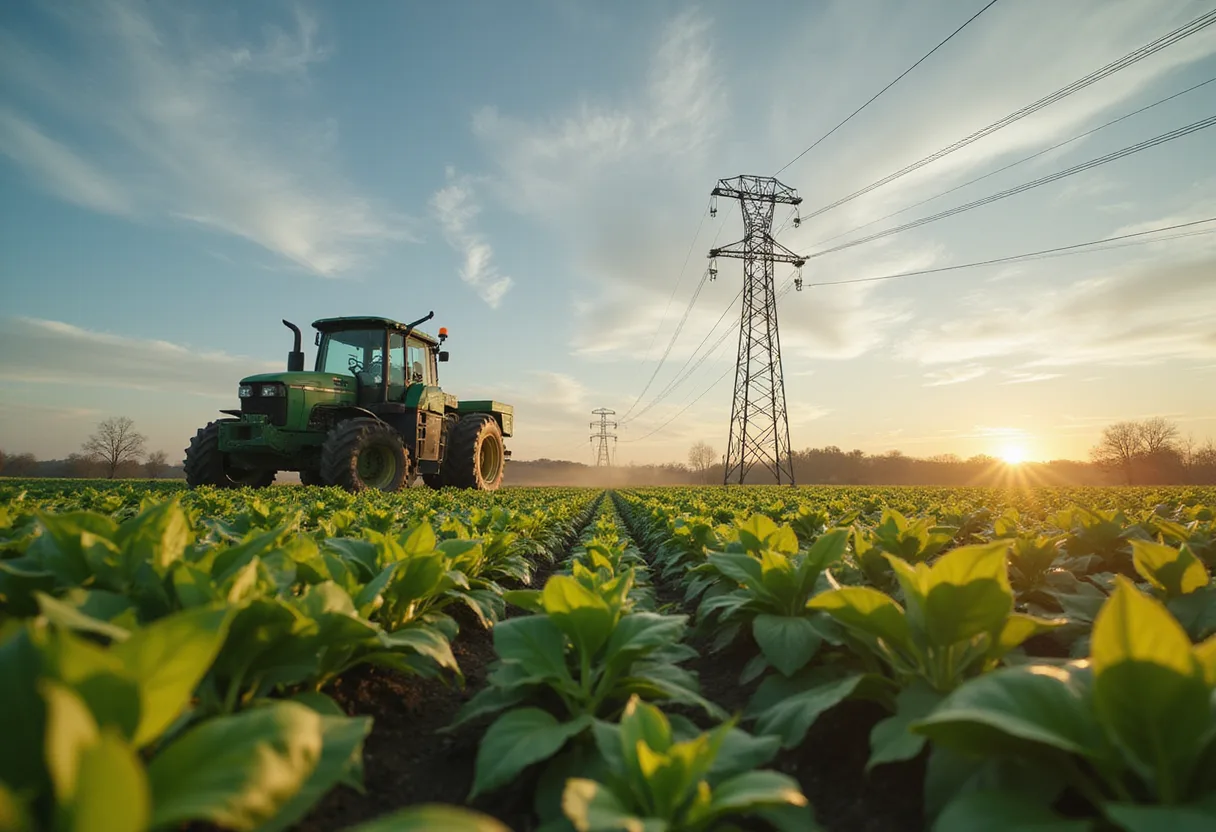
A study now appearing in Nature argues that the bottleneck slowing precision agriculture adoption is not the technology itself but the people who interpret it — and proposes standardized competency assessments for the extension agents who advise growers.
Titled "Strengthening human infrastructure for smart farming through competency-based assessment of extension agents in precision agriculture," the paper reframes the policy discussion away from hardware subsidies and software integration toward the training pipelines behind on-farm advice.
What does the paper target?
Precision agriculture has expanded across major row-crop regions over the past decade, driven by rising machinery amortization costs, volatile fertilizer and crop-protection prices, and tighter per-acre margin pressure. GPS guidance, variable-rate application, telematics, and prescription mapping now reach most commercial grain operations in the United States, Brazil, and parts of the European Union, even where the supporting advisory infrastructure remains informal.
Cooperative extension services, land-grant universities, and farm-retail agronomists remain the primary pathway through which many producers first evaluate products built by Trimble, CNH, John Deere, and Bayer's Climate FieldView. Field staff translate yield maps, soil-electrical-conductivity surveys, and satellite-derived vegetation indices into recommendations that ultimately determine whether growers recoup their annual data subscriptions and capital equipment outlays.
Why competency-based assessment?
The authors argue that existing credentials — such as the Certified Crop Adviser (CCA) program administered by the American Society of Agronomy — were designed before digital agronomy became standard practice. Conventional certifications emphasize soil fertility, integrated pest management, and crop physiology, but do not formally test the data-literacy skills that precision-ag advising now demands: telemetry interpretation, variable-rate input calibration, prescription-map troubleshooting, and platform-specific decision-support diagnostics.
Competency-based assessment would extend the CCA-style model into those digital domains. Such frameworks typically combine written examinations, on-farm case studies, performance audits, and continuing-education requirements pegged to platform updates and emerging sensor hardware.
What changes for agribusiness?
Input retailers and farmer-owned cooperatives that staff precision-ag specialists could adopt the framework as a hiring filter and a structured training roadmap. Manufacturers that fund agronomist positions at distribution partners — common among crop-input and seed companies — may find a uniform benchmark reduces duplicate in-house retraining costs when new equipment platforms or software ecosystems launch.
For growers evaluating capital purchases, certification offers an external check on the expertise of the advisers they rely on. For policymakers contemplating digital-agriculture incentives, the framework supplies a measurable proxy for whether public and private extension programs are actually building the human capital that technology adoption requires.
What remains unsettled
The paper does not specify which institutions would administer assessments, how costs would be split between public extension budgets and private employers, or whether competency certification would impose mandatory continuing-education hours comparable to pesticide applicator licensing. Pilot geographies, fee structures, and rollout timelines have not been disclosed in the publicly available abstract, and any large-scale rollout would require coordination with land-grant universities, state cooperative extension services, the CCA program's governing board, and private-sector input retailers.
The authors' suggested framework will draw industry attention as growers and their advisers plan next year's training budgets and retailers restructure agronomy staffing around increasingly autonomous equipment and software-defined workflows.
via Google News: Precision agriculture (Source)
More from Marcus Bennett
Show full bio
Senior reporter covering regulation, policy and their impact on Agribusiness coverage for industry professionals at Agribusiness Wire.
406 articles
Also in the yard
- HEAL Report Brands Precision Agriculture a 'Distraction' From Food System Reform
- USDA ARS Publication Maps Benefits and Tech Lineage of Precision Agriculture
- USDA Moves to Build Digital Infrastructure for Precision Ag
- Reps. Davis, Mann Reintroduce Promoting Precision Agriculture Act
- Research Targets Precision Agriculture Cost Barrier for Smaller Farms