Lot No. LOT-6059 · offered October 13, 2026
Trade & ExportsLot sheet
Ukraine seeks German port access to move farm exports, minister says
Ukraine has formally asked to use German seaports to export agricultural goods, the agriculture minister said. The proposal would open a new shipping lane beyond Black Sea infrastructure.
Market notes
- Ukraine's agriculture minister said the country has formally asked to use German seaports for farm exports.
- Devdiscourse carried the minister's remarks; no shipment volumes, target ports or timelines were disclosed.
- Ukrainian farm exports run primarily on Black Sea infrastructure.
- Berlin had no public response at the time of the wire report.
- Brussels has previously applied safeguard measures on Ukrainian grain and oilseed imports after complaints from frontline states.
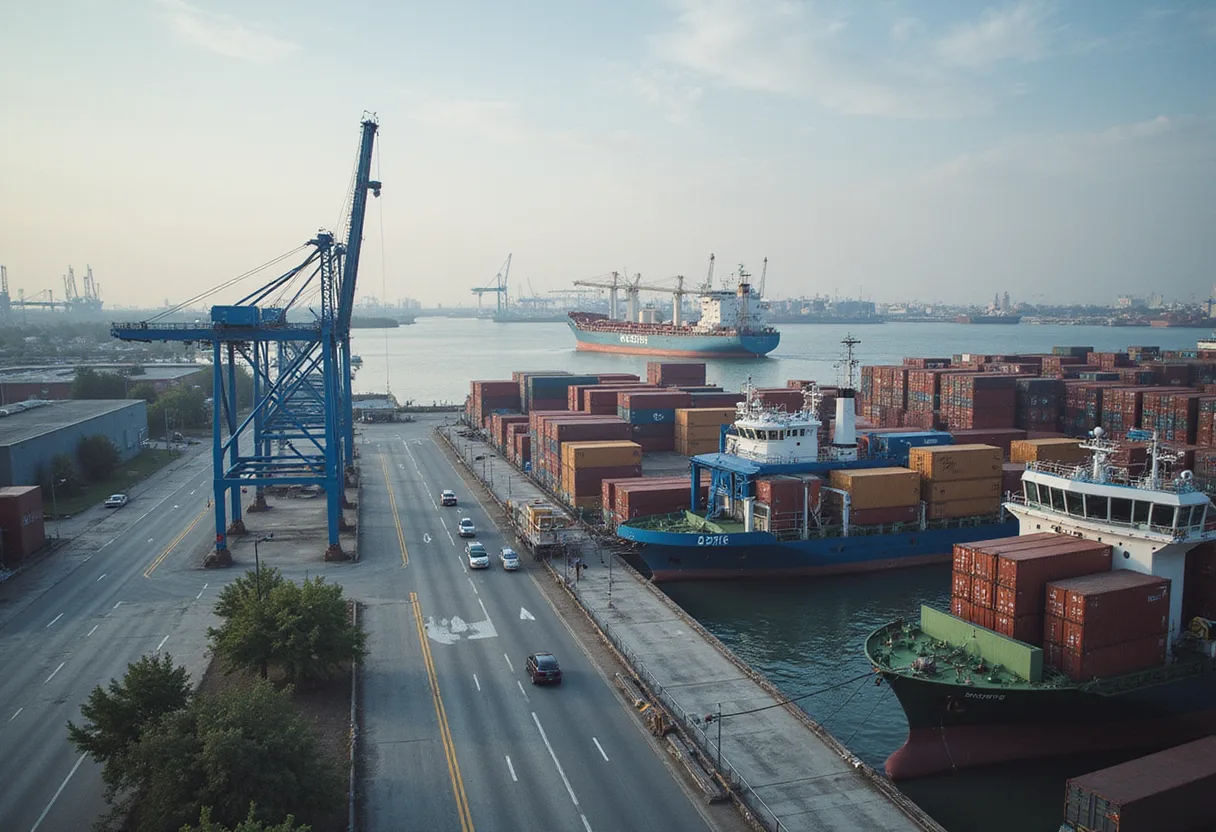
Ukraine has formally asked to use German seaports as an additional export channel for agricultural products, the country's agriculture minister said, Devdiscourse reported. The proposal would open a new shipping lane for Ukrainian grain and oilseed trade.
No shipment volumes, target ports, commodity breakdowns or timelines appeared in the initial wire. The request nevertheless carries weight. Ukrainian farm exports run primarily on Black Sea infrastructure, and any German port access would supplement, not replace, those terminals.
Why does Ukraine want German port access?
The minister's remarks point to redundant shipping capacity. Disruption risk and infrastructure strain have made the search for alternative harbors a standing priority for Kyiv's farm-export planners.
German terminals could, in principle, receive agricultural cargoes routed by rail or inland waterway from western Ukraine. The economics depend on rail tariffs, barge availability, border handling speed and silo capacity. The Devdiscourse report addressed none of these.
Insurance rates for grain cargoes transiting contested waters have moved with each escalation, raising the cost-per-tonne of every Black Sea shipment. Diversifying geography is the policy lever, not just a commercial preference.
What does the move mean for basis?
Export channel choice drives basis. Farmers track FOB Black Sea values closely when booking sales, and a working German port option would widen the bidding pool. More buyers, generally firmer prices at the farm gate.
Domestic Ukrainian corn and wheat prices track closely with export execution, making port capacity a direct margin input rather than a downstream concern. Input economics follow the same logic. A diversified outbound channel signals stable cash flow, which translates into better credit terms for planting and harvest operations.
What is at stake for European trade flows?
Ukrainian agricultural product has moved overland into neighboring EU markets at scale since the Black Sea route became unreliable. That overland surge has drawn repeated farmer complaints in frontline states. Brussels has responded with safeguard measures on Ukrainian grain and oilseed imports.
Routing Ukrainian cargoes through German export harbors rather than overland could ease that friction. It would also tie Ukrainian farm economics more tightly to Rhine and Elbe logistics chains. A structural change in trade geography.
What does the announcement not say?
The wire report did not identify the German ports in question. It did not name a counterpart in Berlin, did not cite a specific commodity list, and did not state whether any agreement had reached signature stage. Berlin had no public response at wire time.
Ukrainian officials have discussed logistics cooperation with several European partners in recent years. Past talks produced bilateral memoranda on rail transit. No German port agreement of this scale has emerged.
What comes next?
Watch Berlin's reply. Industry contacts will be watching the German agriculture ministry for any follow-up signal. A bilateral memorandum on port access would be the next logical step.
Until then, the request sits as an opening position in a longer negotiation that will run against domestic farmer sentiment in Germany and EU-level grain market rules.
By Grace Kim
via Google News: Agricultural trade (Source)
More from Grace Kim
Show full bio
Correspondent covering people, launches and day-to-day practice in Agribusiness coverage for industry professionals at Agribusiness Wire.
453 articles
Also in the yard
- Ukraine Eyes Baltic Ports for Grain Exports, Mirroring Russian Route
- Ukraine Seeks German Port Access for Farm Exports, Official Says
- Ukraine: Black Sea Port Closures Could Halve Farm Exports
- Ukraine Seeks German Ports for Farm Exports, Minister Says
- Rail Grain Deliveries to Ukrainian Ports Fall 38.6% in September